
Coding & Development
Browsing page 42 of AI tools for DevOps & Infrastructure in Coding & Development. Sorted by confidence score — our independent quality rating.

BestProxy
BestProxy offers a comprehensive suite of proxy solutions, including unlimited residential, static residential, static data center, and long-acting ISP proxies. Designed for high-volume data tasks, it provides global IP coverage across 200+ countries, states, and cities, ensuring high anonymity and multi-concurrency support. The platform is ideal for web scraping, AI model training, ad verification, market research, and social media automation, offering unlimited bandwidth and sessions. BestProxy features developer-friendly APIs, user-friendly dashboards for custom proxy settings, and compatibility with mainstream LLM training frameworks. It aims to reduce latency and ensure reliable uptime for continuous operations.
ai-reference-models
Intel® AI Reference Models is a repository that provides Intel optimizations for running deep learning workloads on Intel® Xeon® Scalable processors and Intel® Data Center GPUs. It includes links to pre-trained models, sample scripts, best practices, and step-by-step tutorials for popular open-source machine learning models. The project aims to quickly replicate complete software environments that demonstrate the best-known performance of various model/dataset combinations, showcasing the AI capabilities of Intel platforms. While the project has reached the end of its active development, with v3.4.0 being the last release with new features, it will be archived in March 2026, with critical vulnerability fixes until then. Users can refer to Intel® Extension for PyTorch* and Intel® Extension for OpenXLA* projects for alternatives.
skypilot
SkyPilot is a comprehensive system designed to run, manage, and scale AI workloads across diverse infrastructure environments. It offers a simple interface for AI teams to execute jobs on any infrastructure, including Kubernetes, Slurm, over 20 cloud providers, and on-premise setups. For infrastructure teams, SkyPilot acts as a unified control plane, enabling advanced scheduling, scaling, and orchestration of AI compute resources. Key features include flexible provisioning of GPUs, TPUs, and CPUs with smart failover, multi-cloud and multi-cluster support, and intelligent scheduling to maximize GPU fleet utilization through autostop and binpacking. It supports existing GPU, TPU, and CPU workloads without requiring code changes, making it a versatile solution for accelerating AI/ML velocity and optimizing resource management.
mlops-v2
The Azure MLOps (v2) solution accelerator offers enterprise-ready templates designed to streamline the deployment of machine learning models on the Azure Platform. This project serves as a foundational starting point for MLOps implementation within Azure, emphasizing repeatable, automated, and collaborative workflows. It empowers teams of ML professionals to efficiently get their machine learning models into production. The accelerator focuses on simplicity, modularity, repeatability, security, collaboration, and enterprise readiness, utilizing a template-based approach to enhance operational efficiency across the data science lifecycle. It supports both Azure DevOps and GitHub-based deployments, providing architectural patterns and quickstart guides for various project scenarios.
.png&w=3840&q=75)
Barbara
Barbara is an Edge AI platform designed for industrial companies to deploy, run, and monitor Edge Applications and AI models directly on-site. It offers a simplified approach to managing industrial infrastructure compared to traditional cloud solutions. The platform provides container orchestration, industrial connectors for various assets, and ecosystem integration, allowing users to deploy Docker-based apps and integrate with existing development environments. For AI/ML developers, Barbara facilitates model deployment to Edge Nodes and offers an Apps Marketplace for off-the-shelf tools. Edge Infrastructure Managers benefit from effortless device lifecycle management, professional-grade network connectivity, and zero-touch provisioning for faster deployments. The platform emphasizes cybersecurity, IT/OT convergence, and MLOps capabilities to optimize and package trained models for efficient inference.
katib
Katib is a Kubernetes-native project designed for automated machine learning (AutoML), providing robust capabilities for hyperparameter tuning, early stopping, and neural architecture search. It is framework-agnostic, allowing users to tune hyperparameters for applications written in any language and supporting popular ML frameworks like TensorFlow, PyTorch, and XGBoost. Katib can execute training jobs using various Kubernetes Custom Resources, including Kubeflow Training Operator, Argo Workflows, and Tekton Pipelines. It offers a range of search algorithms such as Random Search, Bayesian Optimization, TPE, and CMA-ES, and integrates with frameworks like Goptuna, Hyperopt, and Optuna. A Python SDK is available to simplify the creation of hyperparameter tuning jobs for data scientists.
osaurus
Osaurus is an AI edge infrastructure solution specifically designed for macOS, allowing users to run both local and cloud-based AI models efficiently. This tool provides a native, always-on runtime environment, which is crucial for powering continuous AI workflows. It also facilitates the sharing of AI tools across various applications, enhancing productivity and integration within the Apple ecosystem. The project has recently moved to a new repository at osaurus-ai/osaurus, where all active development, issues, and releases are now managed. Users are encouraged to update their git remote to the new location to access the latest features and contributions.
Yatai
Yatai (屋台, food cart) is a Kubernetes deployment operator specifically designed for BentoML, enabling model deployment at scale. It allows DevOps teams to seamlessly integrate BentoML services into their existing GitOps workflows, facilitating the deployment and scaling of machine learning models on any Kubernetes cluster. Yatai is cloud-native and DevOps-friendly, utilizing a Kubernetes-native workflow with its BentoDeployment CRD (Custom Resource Definition). This approach makes it easy to fit BentoML-powered services into existing operational pipelines. The tool provides documentation for installation and offers a quick tour to try it locally in a minikube cluster, along with components for image building and deployment.
Solace PubSub+
Solace PubSub+ is a comprehensive event-driven integration platform designed for the agentic AI era. It provides a world-class event broker and event mesh to help organizations reimagine their approach to integration. The platform enables orchestration of AI agents, feeding them the real-time data necessary for optimal performance. Key components include Solace Event Portal for design, cataloging, and management of event-driven architectures, and Solace Insights for monitoring event broker and mesh health. It supports various protocols like AMQP, JMS, MQTT, REST, and WebSocket, and integrates with platforms such as AWS, Azure, Google Cloud, and Kubernetes. Solace PubSub+ is built to handle real-time data movement across diverse environments, from connected devices and APIs to legacy systems, ensuring responsiveness and resilience for critical applications.
opencontrol
OpenControl enables users to manage their infrastructure using AI, offering a self-hosted solution that integrates directly with internal resources and codebase. It generates a single HTTP endpoint, acting as a unified gateway that can be chatted with or registered with any AI client, exposing all your connected tools. The platform is universal, supporting tool calling with models from Anthropic, OpenAI, or Google, and ensures security through authentication via any OAuth provider. It can be deployed to AWS Lambda, Cloudflare Workers, or containers, and provides examples for integrating with AWS, Stripe, and SQL databases, making it a flexible solution for developers looking to automate infrastructure management.
feathr
Feathr is a scalable, unified data and AI engineering platform widely used in production at LinkedIn and now an open-source project under the LF AI & Data Foundation. It allows users to define data and feature transformations using Pythonic APIs, register these transformations, and share them across teams. Particularly useful for AI modeling, Feathr automatically computes and joins feature transformations to training data with point-in-time correctness to prevent data leakage. It supports materializing and deploying features for online production use, offers native cloud integration with scalable architecture, and has been battle-tested for over six years. Feathr handles billions of rows and petabyte-scale data with built-in optimizations, providing rich transformation APIs including time-based aggregations and sliding window joins. It also features a built-in registry for feature reuse and an intuitive UI for searching and exploring features and their lineages.
k8m
k8m is a lightweight, cross-platform Mini Kubernetes AI Dashboard designed to streamline cluster management. Built on AMIS and using kom as a Kubernetes API client, it integrates AI capabilities like Qwen2.5-Coder-7B and DeepSeek-R1-Distill-Qwen-7B for intelligent analysis, YAML translation, and log AI diagnostics. It supports multi-cluster management with heart-beat detection, automated reconnection, and granular permission control for users and groups. Key features include a plugin-based architecture, MCP integration for large model tool calls, and advanced security with MCP permission integration. It also offers Pod file and running management, API access, cluster inspection, k8s Event forwarding, CRD management, and a Helm market. The tool is fully open-source, supports multiple architectures and databases, and can be deployed as a single executable, making it highly efficient and easy to use for Kubernetes operations.
CoDynamics Lab
CoDynamics Lab's LATCH is a proprietary inference layer designed to compile large document sets into persistent LLM memory, offering a significant alternative to traditional RAG (Retrieval Augmented Generation) methods. It eliminates the need for chunking, re-reading, or re-embedding documents for every query, drastically reducing cold start times and operational costs. LATCH is self-hosted via Docker, ensuring privacy and control over sensitive data, and is compatible with an OpenAI-format API. It supports various model families like Qwen, Mistral, Llama, and DeepSeek, and requires an NVIDIA GPU with 80GB VRAM. LATCH creates portable .latch or .latchdoc binary files, allowing for rapid reloading and sharing of compiled document intelligence.
Melior ITS
Melior ITS is an IT services provider that is currently in a "construction in progress" phase. While their website is being developed, they indicate a focus on offering various software solutions. These services include UX/UI design, web development, and advanced AI and machine learning solutions. The company aims to deliver customer-centric solutions designed to empower businesses, suggesting a focus on tailored technological support and development for their clients. The current website provides minimal information beyond this, inviting visitors to get in touch.
micronet
Micronet is an open-source library designed for AI model compression and efficient deployment on various hardware platforms. It provides a comprehensive suite of techniques including quantization-aware training (QAT) and post-training quantization (PTQ) for both high-bit and low-bit scenarios, as well as pruning methods like normal, regular, and group convolutional channel pruning. The library also supports batch-normalization fusion for quantization, enhancing model efficiency. For deployment, Micronet integrates with TensorRT, enabling optimized inference in fp32, fp16, and int8 formats with features like op-adapt and dynamic shape support. This makes it an invaluable tool for developers looking to reduce model size and accelerate inference speed.
A1111-Web-UI-Installer
A1111-Web-UI-Installer is a comprehensive installer designed to streamline the setup process for Automatic1111's Stable Diffusion WebUI. This tool aims to make the powerful AI image generation interface accessible to a broader audience by simplifying the often complex installation steps. Users can quickly get the WebUI up and running, enabling them to leverage Stable Diffusion for various creative tasks without extensive technical knowledge. The project is hosted on GitHub, indicating its open-source nature and community-driven development. While the project notes that this specific launcher is obsolete and recommends Stability Matrix, it still serves as a historical reference for simplified WebUI deployment.

RunLLM
RunLLM functions as an always-on AI SRE, integrating with existing observability tools, code, and documentation. When an alert fires, it automatically investigates by correlating evidence across logs, metrics, traces, and tickets. The tool aims to deliver root cause analysis and clear next steps in minutes, significantly reducing mean time to recovery (MTTR). It helps improve uptime, reduce alert fatigue by cutting down noise, and prevent repeat incidents by learning from every investigation. RunLLM is designed for rapid RCA, offering evidence-backed investigations and prioritized mitigation steps. It operates safely by default in read-only mode and continuously learns from incidents and user corrections.
serverless-ml-course
The serverless-ml-course is an open-source educational resource designed to simplify the development and operation of AI-enabled prediction services. It teaches how to build batch and real-time prediction services using Python, focusing on serverless infrastructure. The course covers essential MLOps fundamentals such as versioning, testing, data validation, and operations, enabling users to deploy features and models, train models, and run inference pipelines. A key differentiator is its emphasis on building a prediction service around a model without needing extensive operations experience, making it accessible for those who can program in Python but are not cloud computing experts. It also guides users on building serverless UIs for their prediction services.
BunkerWeb
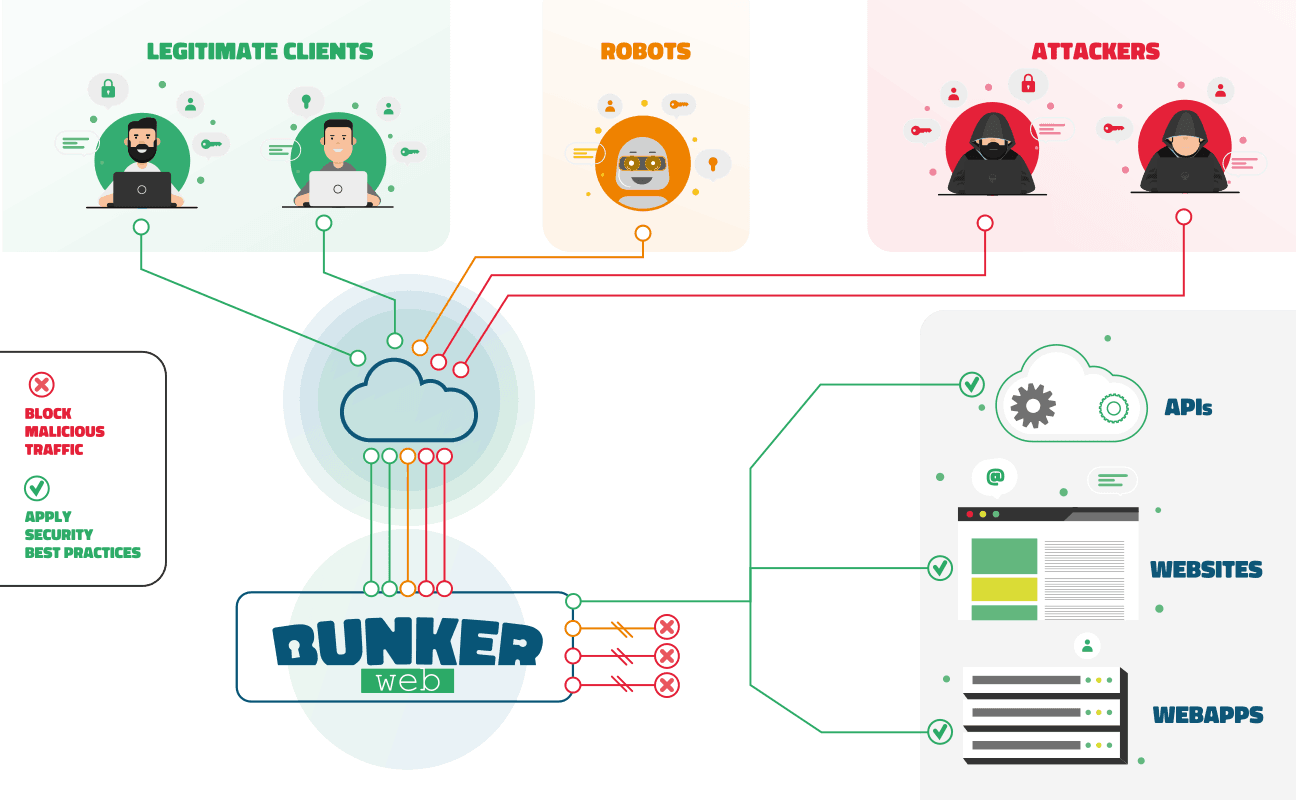
BunkerWeb is a next-generation, open-source Web Application Firewall (WAF) designed to make web services secure by default. It acts as a reverse proxy, shielding web applications from a wide range of threats including those listed in the OWASP Top 10, malicious bots, and DDoS attacks. BunkerWeb integrates seamlessly into various environments such as Linux, Docker, and Kubernetes, providing comprehensive protection for applications and APIs. The solution is highly configurable, offering both a command-line interface and an intuitive web UI for easy management. Its modular architecture allows for easy extension with additional security features via a plugin system, ensuring adaptability to evolving threats and specific security needs. BunkerWeb also offers a fully managed SaaS solution, BunkerWeb CLOUD, for those seeking instant, reliable cloud-based web security without deployment hassle.
DataCrunch
Verda, formerly DataCrunch, is a European ISO-certified cloud provider specializing in AI infrastructure. It offers instant access to powerful production-grade GPUs through self-service instances and multi-node clusters, including bare-metal options with NVIDIA B200, H200, and H100 GPUs. Verda also provides serverless inference for containerized models, allowing auto-scaling and pay-per-usage, and managed endpoints for popular AI models. The platform is designed to remove infrastructure barriers for AI teams, focusing on optimizing performance, reliability, and costs, with all infrastructure powered by 100% renewable energy and hosted in GDPR-regulated European countries.
EXO Labs
EXO Labs provides a platform for running artificial intelligence models locally, catering to a range of setups from individual MacBooks to extensive clusters. The core philosophy behind EXO is decentralized AI, emphasizing user sovereignty, data privacy, and accessibility. This approach allows individuals and organizations to maintain complete control over their AI infrastructure, ensuring that sensitive data remains on-premises and AI operations are not reliant on external cloud services. Users can download the software directly for personal or small-scale use, or contact sales for tailored enterprise solutions that address larger, more complex deployment needs. EXO Labs aims to empower users with robust, private, and controllable AI capabilities.
robustmq
RobustMQ is a unified messaging engine built with Rust, designed as a communication infrastructure for the AI era. It operates as a single binary, one broker, and one storage layer, eliminating external dependencies and allowing deployment from edge devices to cloud clusters. It natively supports MQTT, Kafka, NATS, AMQP, and its own mq9 protocol on a shared storage layer, meaning a message written once can be consumed by any protocol. The mq9 protocol is specifically designed for AI Agent asynchronous communication, offering features like agent mailboxes with persistent store-first delivery, priority levels, and public mailbox discovery. RobustMQ emphasizes minimal operations, multi-tenancy, and ultra-low-latency dispatch, making it suitable for diverse messaging needs from IoT to streaming data pipelines.
tensorflow_template_application
tensorflow_template_application offers a versatile and generic template for deep learning projects built with TensorFlow. It is designed to streamline the development process by providing a structured foundation. The tool supports multiple data formats, including CSV, LIBSVM, and TFRecords, ensuring flexibility in data handling. Key features extend to prediction servers, leveraging TensorFlow Serving and a Python HTTP server, as well as prediction clients available in various programming languages. This comprehensive setup makes it suitable for developers looking to quickly deploy and manage deep learning models.
xmanager
XManager is an open-source platform developed by Google DeepMind designed for managing machine learning experiments. It simplifies the process of packaging, running, and tracking ML experiments, whether executed locally or on Google Cloud Platform (GCP). The platform offers Python APIs that allow users to interact with experiments through launch scripts, providing a structured approach to ML development. Key features include defining executable specifications for binaries, containers, and Python modules, as well as executor specifications for running jobs on various platforms like local machines, Vertex AI, or Kubernetes. XManager supports both single jobs and JobGroups for gang scheduling, making it suitable for complex, multi-component experiments. It also facilitates the management of hyperparameters and resource requirements for each job.