
Coding & Development
Browsing page 41 of AI tools for DevOps & Infrastructure in Coding & Development. Sorted by confidence score — our independent quality rating.

ModelOp
ModelOp is a leading AI lifecycle management and governance platform designed for enterprises. It provides a centralized AI system of record, enabling visibility into all internal and third-party AI solutions. The platform automates AI deployment with enforceable policies, accelerating time-to-production for ML, GenAI, Agentic AI, and vendor AI. ModelOp helps organizations control costs, ensure audit-readiness, and deliver executive insights by integrating with existing systems to orchestrate governance. It supports various industries and roles, offering solutions for AI governance, risk management, and compliance with standards like NIST AI RMF and EU AI Act.

Moreh
Moreh offers full-stack inference software designed to unlock peak LLM inference performance across a range of hardware, including AMD GPUs, Tenstorrent chips, and heterogeneous GPU clusters. Its MoAI Inference Framework handles routing, scheduling, auto-scaling, and SLO-driven optimization, while Moreh vLLM provides state-of-the-art model optimization, quantization, and graph execution. The platform also includes native vLLM Moreh Libraries with custom kernels for GEMM/Attention/MoE and communication. Moreh aims to unify GPUs across vendors and generations, maximize tokens per dollar through chip-level and cluster-level optimization, and significantly reduce inference costs and latency, as demonstrated by benchmarks showing substantial improvements over existing solutions.
Moderne
Moderne is an AI-driven platform that builds knowledge, discovery, and execution tools for coding agents. It enables agents to operate faster, more accurately, and at significantly lower cost across real-world software systems. Powered by the OpenRewrite Lossless Semantic Tree (LST), Moderne offers a comprehensive context model for understanding and transforming code at scale. The platform provides tools for deterministic framework and language upgrades, bulk vulnerability remediation, multi-repository change coordination, precomputed context registries, and high-performance organization-wide search. Moderne aims to improve agent performance, reduce token costs, accelerate change velocity, and ensure multi-agent enterprise readiness.
tflite_gles_app
tflite_gles_app offers GPU-accelerated deep learning inference applications, leveraging TensorFlow Lite GPU Delegate and TensorRT for enhanced performance. This open-source project is designed for platforms such as Raspberry Pi, NVIDIA Jetson, and Linux PCs. It includes a variety of applications covering tasks like lightweight and high-accuracy face detection (Blazeface, DBFace), age and gender estimation, image classification, object detection, 3D facial surface geometry estimation (Facemesh), hair segmentation, 3D handpose estimation, iris detection, 3D object detection, various pose estimations (Blazepose, Posenet), 3D human pose estimation, depth estimation, semantic segmentation, face segmentation, selfie-to-anime transformation, artistic style transfer, and text detection. The repository provides detailed instructions for building and running applications on different target environments, supporting both live camera and recorded video file inputs.

Secure.com
Secure.com provides an AI-powered security automation platform designed to augment security teams with Digital Security Teammates. This platform automates threat detection, alert triage, and incident response, offering 24/7 coverage and reducing alert fatigue. It integrates with over 200 tools, providing a unified view of assets, identities, and risks. Secure.com helps organizations achieve continuous compliance, faster incident resolution, and reduced blind spots through automated asset discovery. The platform offers flexible workflows, human-in-the-loop control with explainable AI, and a collaborative conversational interface for tasks like triage, compliance checks, and risk insights. It aims to supercharge security operations without increasing headcount, delivering measurable impact from day one.
NAX Group
NAX Group offers an enterprise AI software platform designed to streamline the development and deployment of custom AI applications. The platform focuses on leveraging automation to build, deploy, and run these applications efficiently. This approach aims to significantly reduce operational costs, accelerate the time it takes for businesses to realize value from their AI investments, and ultimately create a competitive advantage. By providing a comprehensive solution for managing the AI lifecycle, NAX Group enables organizations to integrate advanced AI capabilities into their operations without extensive manual intervention, fostering innovation and efficiency across various business functions.

VMetal
VMetal offers a comprehensive solution for managing GPU data centers, enabling organizations to operate them like hyperscalers. It automates the provisioning and PXE booting of bare metal servers, dynamically scales Kubernetes compute clusters, and handles networking and DNS. Designed for Neoclouds, enterprises, and research institutions, VMetal supports high-performance computing for AI, machine learning, and data analytics workloads. It simplifies the deployment of AI platforms such as Run:ai, Ray, Slurm, and SkyPilot, delivering a managed platform experience akin to EC2 or EKS. This approach accelerates innovation and maximizes GPU utilization by turning raw hardware into programmable infrastructure.
QA.tech
QA.tech is an AI testing platform designed to automate end-to-end (E2E), regression, exploratory, and PR testing for web and mobile applications. It employs AI agents that act like real users to test full user journeys, including interactions with third-party apps and email verification, across various platforms. The tool provides instant feedback, integrating into modern development workflows without requiring extensive infrastructure. QA.tech aims to shorten the Dev-QA feedback loop, reduce manual testing hours, and catch bugs early. It offers actionable feedback, detailed logs for debugging, and the ability to ask the AI what to test next in plain English, covering new cases and exploring products like a user would. It also supports integration with tools like GitHub, Slack, and Linear.

FriendliAI
FriendliAI is an AI inference cloud platform designed for AI engineers to efficiently run state-of-the-art open-weight and custom models at production scale. Built by researchers who invented continuous batching, FriendliAI maximizes GPU utilization, delivering speeds up to 3x faster than vLLM and 50% to 90% cost savings compared to closed model APIs. The platform offers a purpose-built stack with custom GPU kernels, smart caching, continuous batching, speculative decoding, and parallel inference for unmatched throughput and ultra-low latency. FriendliAI ensures guaranteed reliability with 99.99% uptime SLAs, geo-distributed infrastructure, and enterprise-grade fault tolerance, supporting over 540,000 Hugging Face models for one-click deployment, as well as custom fine-tuned or proprietary models.

AICA SA
AICA SA offers a platform for advanced robotics, simplifying robot integration and programming across diverse hardware. The AICA System allows robots to sense and adapt to variations, enabling reliable automation in real-time. It supports various use cases such as screwing, polishing, and assembly by combining real-time control with advanced sensor-driven technologies. The platform provides a library of pre-built software components and a visual, node-based editor to develop and deploy advanced robotic skills quickly. AICA System also ensures hardware independence, allowing solutions to be deployed across different robots and sensors, and offers access to an ecosystem for simulation and AI model integration.
Temporal Technologies
Temporal Technologies provides an open-source durable execution platform designed to build invincible applications that never lose state, even when underlying systems fail. It allows developers to write business logic using native SDKs in popular programming languages, eliminating the need for complex reconciliation logic. Temporal Workflows automatically capture state at every step, enabling applications to pick up exactly where they left off after any interruption. The platform supports long-running workflows, handles failure-prone logic with automatic retries, and replaces brittle state machines with a robust, fault-tolerant service. Users can host the Temporal Service themselves or utilize Temporal Cloud for a managed solution, gaining full visibility into workflow executions without sifting through logs.
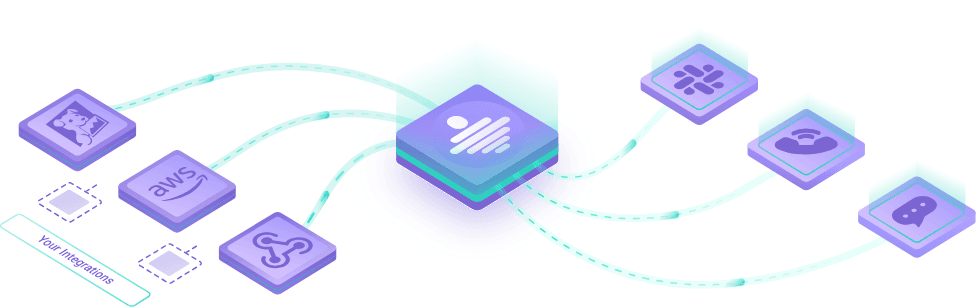
All Quiet
All Quiet is a modern incident management platform designed for DevOps, SRE, and IT operations teams to resolve incidents faster. It centralizes notifications, automates escalation policies, and ensures the right people are notified through their preferred channels, including calls, SMS, push, email, and Slack. The platform offers flexible on-call scheduling, rotations, and overrides, alongside real-time alerting for websites, APIs, HTTP endpoints, heartbeats, and cron jobs. All Quiet integrates with over 45 tools like Datadog, Grafana, Jira, and Slack, and supports developer-first approaches with Terraform, a Public API, OIDC, and SCIM. It also provides lean status pages for transparent stakeholder communication and detailed reporting for KPI tracking.
Lobe
Lobe offers a free, easy-to-use tool for Mac and PC that enables users to train custom machine learning models by providing examples. While the desktop application is no longer under active development, the project provides various open-source repositories to support developers. These include a Python toolset for working with Lobe models, iOS and web starter projects for integrating trained models into applications, and tools for creating image-based datasets. The project also includes a kit in partnership with Adafruit for bringing machine learning ideas to life, making it a valuable resource for developers looking to implement custom ML solutions.

Aleria
Aleria is an AI platform designed to build and operate sovereign AI systems, enabling enterprises to transform their data into operational intelligence. It offers a comprehensive ecosystem including AI Employees (role-based agents that execute tasks), custom platforms, and advanced AI models for language, computer vision, and voice. Aleria integrates with various data sources like SAP, Oracle, and Salesforce, providing deep analytics, predictive modeling, and a governed datalake. A key differentiator is its focus on sovereignty, allowing deployment on-premise or in private clouds with full data isolation and no external API calls, making it ideal for mission-critical environments where security and data governance are paramount.

Altra
Altra offers radically powerful AI-driven tools for cloud and digital transformation, specifically tailored for system integrators and service providers. Its product suite includes Dr Migrate, which performs deep, rapid AI assessments for cloud migration, provides application treatment recommendations, and optimizes cloud resource allocation for cost efficiency. SensorMine, another key product, enables the creation and deployment of IoT solutions with rapid time-to-value, leveraging a SaaS architecture and pre-built industry solution kits. Altra also provides rugged 'Nexus' sensors and advanced analytics with AI-driven data visualization for intelligent monitoring. The platform focuses on automation, real-time insights, active guidance, and cost optimization to unlock opportunities and empower fearless transformation.
CyArt
The live website for CyArt currently displays a bot verification page, making it inaccessible to determine its core functionalities or offerings. Based on the stored description, CyArt is a center providing services in Cyber Security, Artificial Intelligence, Web Development, and Cloud Solutions. It offers industry-guided internships and aims to enhance the community by providing resources for IT sector journeys. Additionally, CyArt offers data operations services. However, without access to the live site, specific features, pricing, or target audience details cannot be confirmed.
distributed-llama
Distributed-llama is an open-source project designed to accelerate Large Language Model (LLM) inference by leveraging a cluster of connected home devices. It utilizes tensor parallelism and high-speed synchronization over Ethernet to distribute the computational load, allowing more devices to contribute to faster performance. The tool supports various operating systems including Linux, macOS, and Windows, and is optimized for both ARM and x86_64 AVX2 CPUs. It features a root node responsible for loading models and weights, and worker nodes that process slices of the neural network. Distributed-llama supports a range of Llama and Qwen models, offering commands for inference, chat, and running worker nodes, along with an API server. It also provides options for manual model conversion and supports specific quantization types.
QiO Technologies
QiO Technologies provides advanced AI-driven solutions aimed at enhancing energy efficiency and sustainability across data centers and energy-intensive industrial sectors. The core offering, Foresight, is an autonomous AI platform that connects directly to industrial assets, control systems, and sensors to capture and transform raw data into precise operational fingerprints. It then makes zero-touch, closed-loop adjustments to optimize processes for peak performance, leading to significant reductions in energy consumption and carbon emissions. For data centers, ServerOptix™ offers specialized energy savings. QiO's solutions are proven in various industries including brick, glass, metal, ceramics & tile, paper, and food & beverages, delivering immediate gains without disruption and quick time to value.

Sevensense
Sevensense offers Visual AI technology designed to empower mobile robots and industrial vehicles to operate effectively in complex, dynamic environments. Their core products, Alphasense Position and Alphasense Tracker, provide industry-grade Visual-SLAM (Simultaneous Localization and Mapping) for autonomous mobile robots (AMRs) and a real-time locating system (RTLS) for manually operated industrial trucks, respectively. This technology allows for unified mapping and spatial awareness across hybrid fleets, enhancing efficiency, reducing operational costs, and improving safety through collision prevention and predictive risk alerts. Sevensense's camera-based positioning eliminates the need for extensive infrastructure, facilitating quick deployment and easy fleet expansion. The system integrates seamlessly with existing FMS, WMS, and ERP systems, transforming vehicle movements into actionable data for smarter operations.
kubewall
kubewall is an open-source, single-binary Kubernetes dashboard designed for multi-cluster management with integrated AI capabilities. It offers a rich, real-time interface for managing and investigating Kubernetes clusters, providing features like live views of cluster resources, pods, and services. The AI integration leverages models such as OpenAI, Claude 4, Gemini, DeepSeek, OpenRouter, Ollama, Qwen, and LMStudio for automated troubleshooting, configuration optimization, and smart recommendations. It supports effortless installation as a lightweight binary on Mac, Windows, or Linux, with no dependencies. Users can access it securely via any browser, with options for HTTPS setup, and benefit from in-depth resource views, powerful search and filtering, and privacy by design with zero cloud dependency. It also includes port forwarding, live refresh, and aggregated pod logs for efficient debugging and monitoring.
dev-gpt
Dev-GPT is an open-source AI tool designed to automate the microservice development process, acting as a virtual development team. Users provide a description of the microservice they want to build, and Dev-GPT, comprising a Product Manager, Developer, and DevOps AI, handles the entire lifecycle from concept to deployment. It iteratively builds and tests the microservice, generating code, tests, and Dockerfiles. The tool supports both gpt-3.5-turbo and gpt-4 models, allowing for cost-effective or more complex microservice generation. It can run microservices locally in Docker or deploy them to the cloud via Jina AI, and even generates a Streamlit playground for testing.
Microservices-Based-Algorithmic-Trading-System
MBATS is an open-source, Docker-based platform designed for quantitative analysts and algorithmic traders to develop, test, and deploy trading strategies, with a strong emphasis on machine learning. It simplifies the process of bringing trading ideas to production by integrating various open-source tools like Backtrader for strategy development, MLflow for managing machine learning models, and PostgreSQL for market data storage. The platform also includes Apache Airflow for orchestrating jobs and Apache Superset for visualizing backtested and live strategy performance. MBATS offers a modular architecture, making it easy to scale and migrate components to cloud environments like GCP, and supports multiple symbol and strategy types for both backtesting and live trading.
jetson-containers
jetson-containers is an open-source, modular container build system designed for NVIDIA Jetson and JetPack-L4T platforms. It provides a comprehensive collection of the latest AI/ML packages, facilitating the deployment of CUDA containers for edge AI and robotics applications. Users can easily combine various packages like PyTorch, TensorFlow, and ROS2 to create custom containers. The tool includes helper scripts for building and running containers, with features like `autotag` to find compatible images and a Pip server for caching wheels to accelerate builds. It supports different CUDA versions and offers detailed documentation for system setup, building, and running containers, making it a robust solution for developers working with NVIDIA Jetson devices.
TurboTransformers
TurboTransformers is an open-source, fast, and user-friendly runtime environment designed for transformer inference on both CPU and GPU. Developed by WeChat AI, it supports various transformer models including BERT, ALBERT, GPT2, and Decoders. A key feature is its ability to handle variable length inputs without requiring time-consuming offline tuning, allowing for real-time changes in batch size and sequence length. It offers excellent CPU/GPU performance and includes smart batching to minimize zero-padding overhead for requests of different lengths. TurboTransformers provides both Python and C++ APIs, and can be integrated as a plugin for PyTorch, enabling end-to-end acceleration with just a few lines of code. It has been successfully applied in Tencent's online BERT service scenarios, demonstrating significant acceleration for services like WeChat FAQ and QQ recommendation systems.