
Research & Education
Browsing page 334 of AI tools for Research & Education. Sorted by confidence score — our independent quality rating.

python-is-cool
Python-is-cool is an open-source guide curated by Chip Huyen, designed to introduce Python features that are particularly useful for machine learning but might be less commonly understood or utilized. The guide covers topics such as lambda functions, map, filter, and reduce, demonstrating their application with practical code examples. It also delves into advanced list manipulation techniques, including unpacking, slicing, insertion, and flattening, alongside a comparison of lists versus generators for efficient memory usage. Furthermore, the resource explains Python's magic methods (dunder methods) for customizing class behavior, such as `__repr__`, `__eq__`, and `__slots__`, enhancing object representation and comparison. This resource is ideal for developers looking to deepen their Python knowledge for machine learning applications.
SnakeFusion
SnakeFusion is an AI project that leverages genetic algorithms and neural networks to train virtual snakes within a game environment. The core concept involves training five individual snakes, which can then be fused together to create a single, more advanced 'ultimate snake'. This project serves as a practical demonstration of applying evolutionary algorithms and AI in game development. Built using Processing, it provides a hands-on approach to understanding how AI can learn and adapt. Users can interact with the system by adjusting mutation rates, saving trained snakes, and initiating the fusion process to observe the creation of a 'super snake'.

Center for Responsible AI
The Center for Responsible AI is an organization dedicated to fostering the development of ethical and impactful AI products. It brings together a consortium of startups, research centers, unicorns, law firms, and industry leaders to create a virtuous circle of innovation. The center's core mission revolves around three pillars: fair and transparent AI that contributes to a more equal society, sustainable AI that uses energy efficiently, and trustworthy AI that is explainable and complements human capabilities. It aims to develop next-generation AI products based on these principles, with a significant focus on the Portuguese ecosystem. The Center for Responsible AI emphasizes practical solutions and collaboration across various sectors to advance responsible AI.
DeepFAS
DeepFAS serves as an official repository for "Deep Learning for Face Anti-Spoofing: A Survey," offering a comprehensive review of recent advancements in deep learning techniques for face anti-spoofing (FAS). The resource covers various methodologies, including hybrid, pure deep learning, and generalized learning approaches for monocular RGB FAS, as well as multi-modal and specialized sensor-based FAS. It meticulously details publicly available datasets, outlining their characteristics, setup, and attack types, alongside classical evaluation protocols. Researchers and developers can leverage this tool to understand the landscape of FAS, compare different methods, and identify suitable datasets for their work, making it an invaluable academic resource.
ModelingToolkit.jl
ModelingToolkit.jl is a high-performance symbolic-numeric computation framework designed for scientific computing and scientific machine learning within the Julia ecosystem. It allows users to define models at a high level, enabling symbolic preprocessing for analysis and enhancement. The tool can automatically generate optimized functions for model components, such as Jacobians and Hessians, and automatically sparsify and parallelize computations. It also applies automatic transformations, like index reduction, to simplify models for numerical solvers. ModelingToolkit.jl supports composing multiple ODE subsystems and simulating complex Differential-Algebraic Equations (DAEs), making it a powerful tool for advanced scientific modeling and simulation.
PythonNumericalDemos
PythonNumericalDemos is an open-source repository designed to provide Python demonstrations for spatial data analytics. It encompasses a range of topics, including geostatistical and machine learning workflows, making it a valuable resource for both students and educators. The repository is specifically tailored to support courses in data analytics and geostatistics, helping users overcome intellectual hurdles in data science. By offering practical, code-based examples, PythonNumericalDemos facilitates a deeper understanding of complex numerical methods and their application to real-world spatial data problems. Its open-source nature encourages collaboration and continuous improvement within the data science community.
deep-learning-for-image-processing
Deep-learning-for-image-processing is an open-source educational resource designed to help users understand and implement deep learning techniques for image processing. It offers comprehensive tutorials and practical implementations across various domains, including image classification, object detection, semantic segmentation, instance segmentation, and keypoint detection. The resource leverages popular frameworks like PyTorch and TensorFlow (specifically Keras module in TensorFlow2) to demonstrate network architectures and training processes. It includes detailed explanations of models such as LeNet, AlexNet, VggNet, ResNet, YOLO series, FCN, DeepLabV3, Mask R-CNN, and DeepPose. All course materials, including PPTs and code, are provided, making it a valuable asset for students and researchers in the field.
PoseFormer
PoseFormer is an open-source project that provides an official implementation of the paper "3D Human Pose Estimation with Spatial and Temporal Transformers," accepted at ICCV 2021. This tool is designed for researchers and developers working in the field of computer vision and human pose estimation. It offers code built on VideoPose3D, allowing users to evaluate pre-trained models with both CPN detected and ground truth 2D poses as input. Additionally, PoseFormer supports training new models from scratch, with configurable frame inputs to achieve varying levels of accuracy. The repository also links to related works like Context-Aware PoseFormer (NeurIPS 2023) and PoseFormerV2 (CVPR 2023), indicating ongoing research and development in this area.
pymarl
PyMARL is a Python-based, open-source framework developed by WhiRL for deep multi-agent reinforcement learning. It provides implementations of several prominent algorithms, including QMIX for monotonic value function factorisation, COMA for counterfactual multi-agent policy gradients, VDN for value-decomposition networks, IQL for independent Q-learning, and QTRAN for learning to factorize with transformation. The framework is built using PyTorch and integrates with SMAC (StarCraft Multi-Agent Challenge) as its environment, specifically using SC2.4.6.2.69232 for the results in the SMAC paper. PyMARL supports saving and loading trained models, as well as watching StarCraft II replays, making it a comprehensive tool for researchers and developers in the multi-agent RL domain.
LightRSS
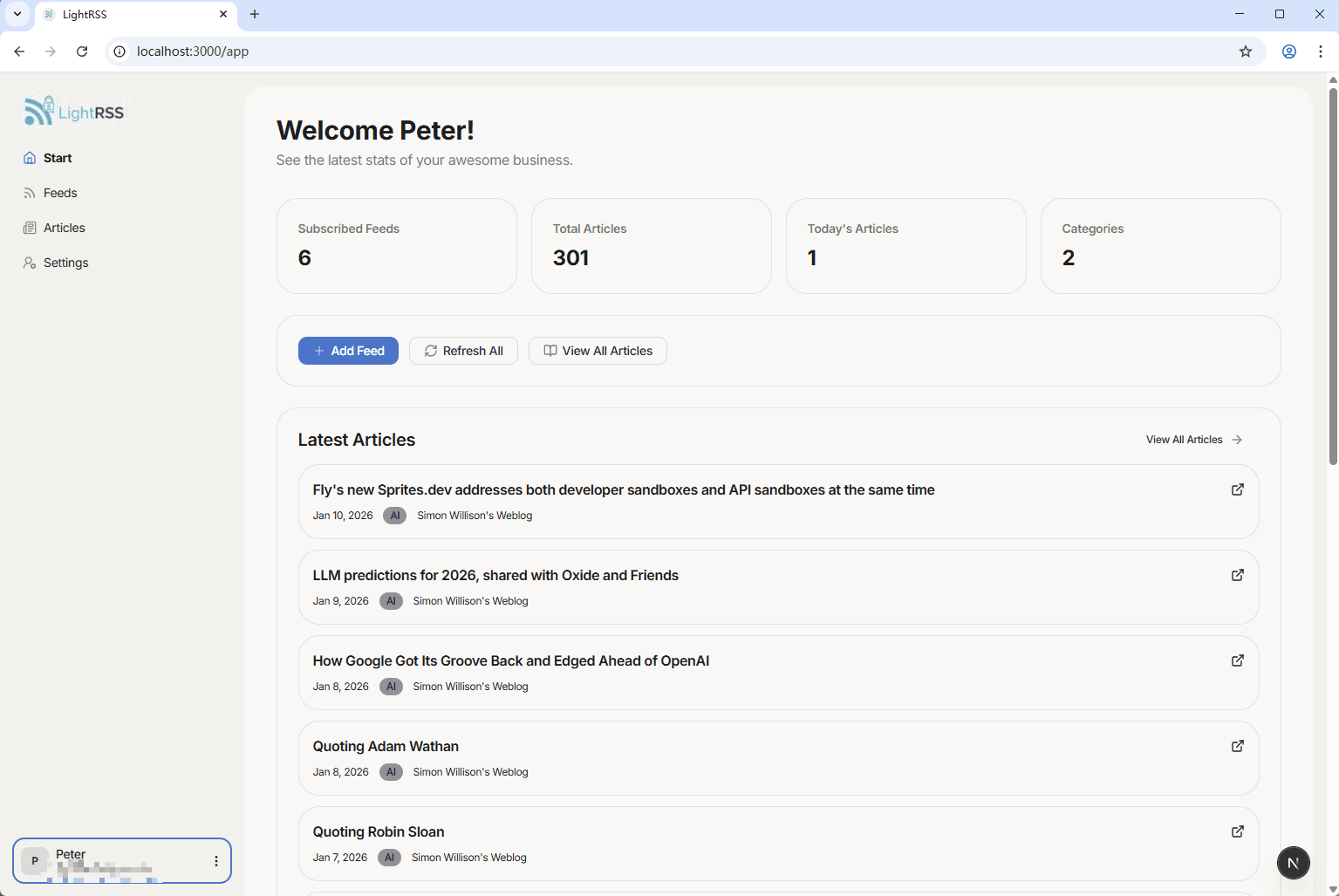
LightRSS is a modern and lightweight RSS reader and feed aggregator designed to help users stay informed by centralizing their favorite content. It provides powerful features for feed management, including the ability to subscribe via URL, import feeds using OPML, and organize them into custom categories. The platform offers a responsive, distraction-free reading experience, allowing users to read articles directly within the app or open original links. Articles are automatically fetched daily, with an option for manual updates. LightRSS supports up to 100 feeds on its free plan and 1500 feeds with a Pro subscription, making it suitable for both casual and power users seeking an efficient way to manage their news and content sources.
AIMX Network
AIMX Network serves as a global platform dedicated to connecting AI leaders, practitioners, and innovators. It focuses on addressing the challenges and fostering growth within regional AI communities by providing opportunities to explore real-world AI solutions. Through events like AIMX Singapore and virtual meetups, the network enables participants to learn from expert insights, engage with groundbreaking ideas, and build meaningful collaborations. The platform also offers resources like 'MX Bytes' articles, which delve into topics such as cybersecurity in AI, enterprise AI adoption, and ethical considerations in AI development, helping members to confidently implement AI across their organizations.

Spacum search engine
Spacum is an independent internet privacy company offering a free web browser and search engine designed to protect user data. Unlike traditional browsers and search engines, Spacum does not track searches or browsing history and actively blocks third-party trackers, ads, and cookie pop-ups. Its comprehensive privacy features include web tracking protection to stop Facebook and Google trackers, email protection to intercept and remove hidden email trackers, and app tracking protection for Android devices. Spacum aims to provide a secure and efficient browsing experience, making privacy accessible to everyone without compromising search relevance or speed. It is available across multiple platforms including Windows, macOS, Android, and iOS.
AnyQuestions.ai
AnyQuestions.ai is an AI-powered education platform designed to enhance the learning experience for students and educators. Users can upload various documents, and the platform leverages AI to generate comprehensive answers, complete with citations for accuracy and reliability. Beyond just answering questions, AnyQuestions.ai also creates AI-generated flashcards, interactive learning maps, and custom quizzes. These features are specifically designed to optimize study habits, reinforce understanding, and provide personalized learning paths, making it a versatile tool for both self-study and educational content creation.
YTGloss
YTGloss is a free AI browser extension designed to enhance learning from YouTube videos by providing instant, context-aware explanations. It identifies words and concepts you might not know and displays their definitions directly on the video screen, similar to a notification. This eliminates the need to pause and search for information, allowing users to stay focused on the content. The extension understands the video's subject matter, ensuring explanations are relevant (e.g., "cell" in biology vs. programming). Users can toggle video analysis on or off with a simple keyboard shortcut or through the extension menu, switching between learning and leisure modes as needed. YTGloss offers various pricing tiers, including a free plan, to accommodate different learning needs.

AI5050
AI5050 is an annual conference dedicated to exploring the impact of AI on business and providing strategies for growth. The event brings together forward-thinking professionals and industry leaders for a full day of inspiring keynotes, practical workshops, and fresh perspectives. Attendees learn how to turn AI from a buzzword into a tangible business advantage through hands-on sessions and real-world use cases. The conference aims to equip participants with the knowledge to create real impact across their organizations using AI, fostering innovation and strategic planning.
The timm Leaderboard
The timm Leaderboard is a Hugging Face Space designed for exploring and comparing the performance of various PyTorch image models. Users can interactively visualize model accuracy and other metrics through charts and tables. The platform offers robust filtering capabilities, allowing users to search for models by name using wildcards, regular expressions, or fuzzy matching. This tool is particularly valuable for AI researchers and machine learning engineers who need to benchmark and select appropriate models for their projects, providing a comprehensive overview of the timm ecosystem's model performance.
qikqiak.com
qikqiak.com is a comprehensive blog dedicated to exploring various cutting-edge technologies. It offers in-depth articles and resources on topics such as ChatGPT, containerization, Kubernetes, DevOps practices, Python, and Golang. The platform also delves into microservices architecture and other related technical subjects, providing valuable insights for developers and technology enthusiasts. The blog aims to keep its audience informed about the latest trends and best practices in the tech world, making complex concepts accessible through detailed explanations and practical examples. It serves as a knowledge hub for those looking to deepen their understanding and skills in these rapidly evolving domains.

Liveboard
Liveboard is a real-time collaborative whiteboard designed for teachers and teams to facilitate brainstorming, lesson planning, idea mapping, and sharing plans from any location. This online whiteboard supports real-time collaboration, making it an ideal solution for remote teams and online learning environments. Users can leverage its features for interactive teaching, collaborative planning, and shared digital workspaces. It aims to enhance productivity and communication by providing a dynamic canvas where multiple users can contribute simultaneously, ensuring everyone stays aligned and engaged whether in a virtual classroom or a remote team meeting.
Deutsch-Mentor
Deutsch Mentor is an AI-powered language learning application designed to make learning German fun and interactive. Users can chat with Felix, a personal AI mentor, who adapts to their learning pace and interests, providing real-time feedback, corrections, and explanations. The app includes interactive flashcards to reinforce vocabulary, allowing users to save new words from chats or import pre-made lists. Gamified learning features, such as word match games and XP points, motivate users to build streaks and level up their German proficiency. It caters to all levels, from beginners to advanced learners, offering a comprehensive and personalized experience through chat-based learning, vocabulary building, and engaging practice.
awesome-vision-language-pretraining-papers
awesome-vision-language-pretraining-papers is a curated collection of recent advancements in Vision and Language PreTrained Models (VL-PTMs). Maintained by WANG Yue, this GitHub repository provides an organized list of academic papers covering image-based, video-based, and speech-based VL-PTMs. It categorizes papers into areas like Representation Learning, Task-specific applications, and Analysis, offering direct links to papers and their associated code where available. The resource also includes sections for other transformer-based multimodal networks and additional relevant surveys and reading lists, making it an invaluable resource for researchers and practitioners looking to stay updated on the latest developments in multimodal AI.
365-Days-Computer-Vision-Learning-Linkedin-Post
365-Days-Computer-Vision-Learning-Linkedin-Post is an open-source GitHub repository curated by Ashish Patel, offering a comprehensive, day-by-day learning journey through various computer vision concepts and models. Each entry in the repository corresponds to a LinkedIn post, providing a concise overview and a link to further resources on topics ranging from EfficientDet and YOLO Series to Vision Transformers, GANs, and advanced segmentation techniques. This resource is ideal for individuals looking to deepen their understanding of computer vision through a structured, accessible format, leveraging the power of community learning and readily available information.
3D-Adapter
3D-Adapter is an AI-powered tool designed to generate high-quality 3D models. Users can create detailed 3D visuals by providing descriptions or various inputs, making it accessible for a range of creative and technical applications. The tool leverages advanced AI to interpret user specifications and produce geometry-consistent multi-view diffusion, which is crucial for realistic 3D generation. Based on research papers, 3D-Adapter offers a demo to showcase its capabilities, making it a valuable resource for 3D artists, researchers, and anyone looking to efficiently produce 3D content without extensive manual modeling. It is available as a free-to-use application.
Fab AI (AI-for-Education.org)
Fab AI is a not-for-profit organization dedicated to leveraging AI to enhance education in low- and middle-income countries (LMICs). The platform offers a range of projects and tools, including AI benchmarks for education that test pedagogical knowledge, special educational needs (SEND) pedagogy, visual maths, and visual reasoning. Fab AI also provides climate tools to assist governments in making data-driven infrastructure improvements and managing extreme weather impacts on education. Their work includes rebuilding school data systems and fostering partnerships to improve educational policies and projects with a data-driven approach. The initiative aims to supercharge human connections in education through technology, ensuring every learner has the support needed to succeed.
awesome-chatgpt-api
awesome-chatgpt-api is a comprehensive, curated list of applications and tools that leverage the new ChatGPT API. This resource is particularly valuable as it highlights tools that enable users to configure and use their own API keys, facilitating free and on-demand access to their personal quota. Beyond just a list of tools, it includes a dedicated development section, offering a collection of projects and articles designed to assist developers in building better applications. The list covers a wide range of categories, including plugins, extensions, web apps, desktop and mobile applications, and command-line interface (CLI) tools, making it a versatile resource for anyone looking to integrate or develop with the ChatGPT API.