
Research & Education
Browsing page 336 of AI tools for Research & Education. Sorted by confidence score — our independent quality rating.

AI Text Detector 01
AI Text Detector 01 is a web-based tool hosted on Hugging Face Spaces, designed to help users identify text that may have been generated by an artificial intelligence language model. By simply entering any text into the application, users receive a percentage score that indicates the probability of the content being AI-generated. This tool is particularly useful for verifying content originality and ensuring academic integrity in various contexts. It operates under an Apache-2.0 license, making it freely accessible for use. The interface is straightforward, focusing on a single core function: providing a quick and clear assessment of text origin.
Minitron
Minitron is an AI chatbot tool developed by NVIDIA and hosted on Hugging Face Spaces. The current status indicates a runtime error, preventing the application from functioning. The error message suggests an issue with NVIDIA driver detection, indicating that the application requires an NVIDIA GPU and a properly installed driver to run. While the intended functionality is an AI chatbot, the current state of the application on Hugging Face Spaces is non-operational due to this technical issue. Users attempting to access the tool will encounter this error, preventing any interaction with the chatbot features.
deep-reinforcement-learning
The deep-reinforcement-learning repository serves as a comprehensive resource for Udacity's Deep Reinforcement Learning Nanodegree program. It offers a collection of tutorials that guide users through the implementation of various reinforcement learning algorithms, including Dynamic Programming, Monte Carlo, Temporal-Difference, Deep Q-Networks, and Deep Deterministic Policy Gradients, all utilizing PyTorch. Additionally, the repository features labs and projects that leverage rich simulation environments from Unity ML-Agents, allowing users to train agents in tasks like navigation, continuous control, and collaborative competition. It also includes benchmarks for classic control and Box2d environments, along with detailed setup instructions for the Python environment.
Academic Help
Academic Help is an AI-powered platform dedicated to supporting students through various stages of academic writing and research. The tool provides a comprehensive suite of resources aimed at improving the quality and efficiency of academic work. Key functionalities include features to enhance writing style, ensure the originality of content through plagiarism checks, and simplify the often-complex citation process. By offering these integrated tools, Academic Help strives to boost academic performance and streamline workflows for students across different educational levels, making the research and writing journey more manageable and effective.
Reforgify
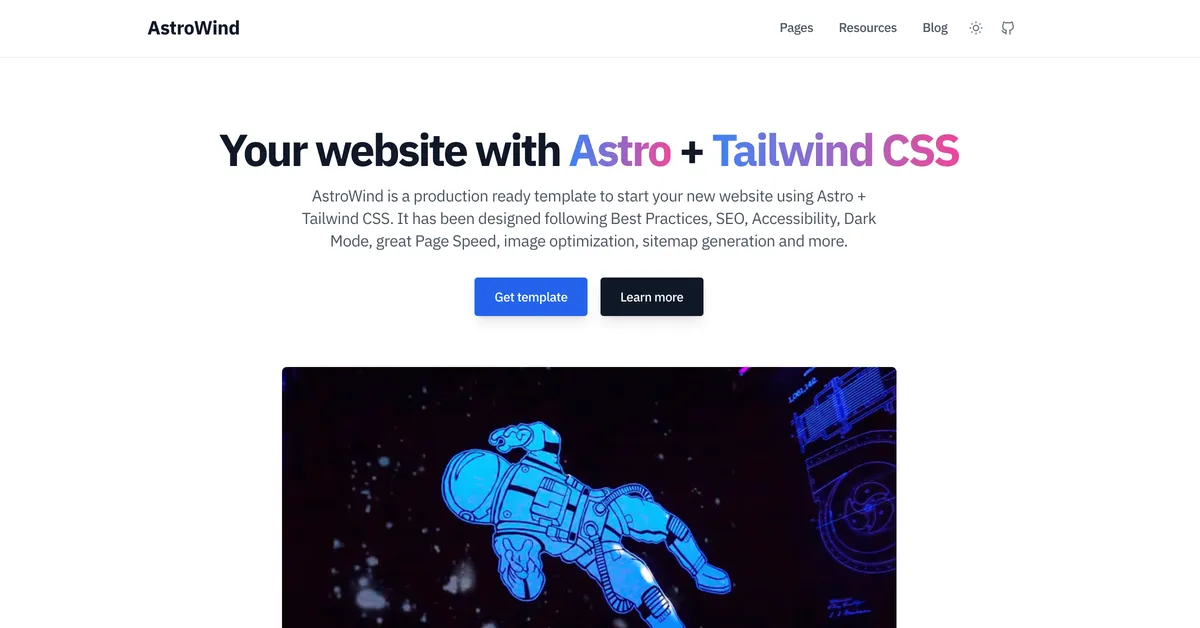
Reforgify is an AI-driven platform designed to help innovators and entrepreneurs discover and adapt successful startup ideas from around the globe. It offers tailored idea discovery, allowing users to search by industry, target user group, or Jobs-To-Be-Done criteria. The platform facilitates local market adaptation by identifying innovative ideas not yet explored in a user's country. Reforgify provides de-risked ideas by focusing on VC-funded startups and keeps users updated with fresh and emerging concepts. Detailed idea profiles include user groups, problems, solutions, business models, and required skills, along with insights into trending topics and funding patterns.
Cortical Labs
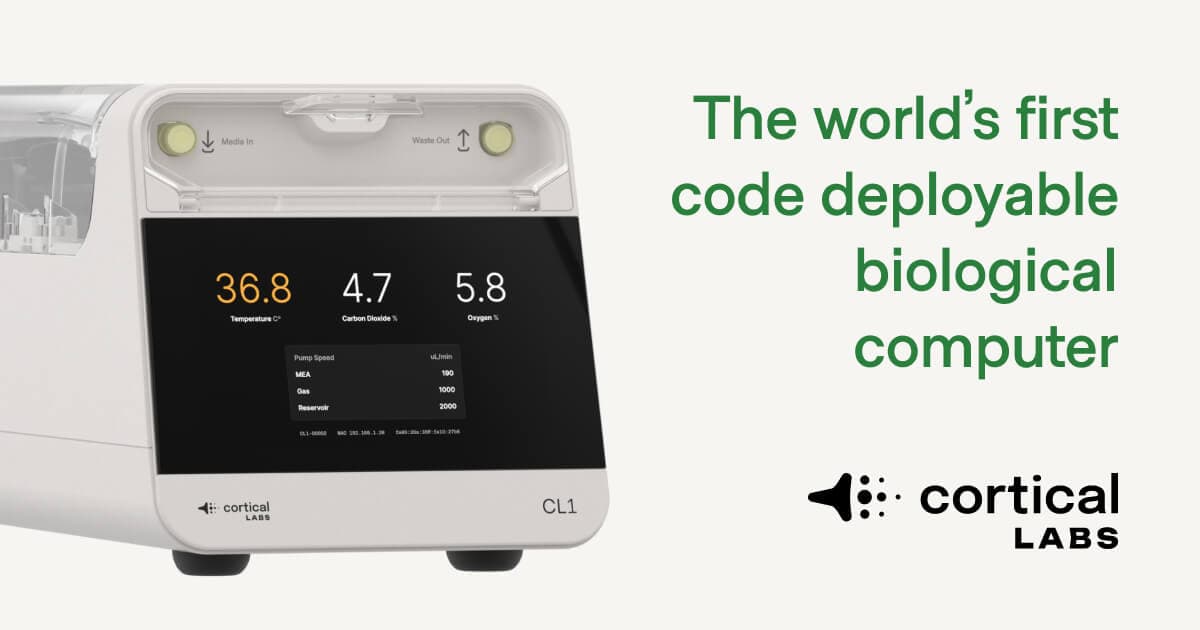
Cortical Labs pioneers a new era of computing by merging lab-grown neurons with silicon chips, creating what they term 'actual intelligence.' Their flagship product, the CL1, is the world’s first code-deployable biological computer, allowing users to test how lab-grown neurons process information and learn. Complementing this, the Cortical Cloud provides a biological cloud computing platform, enabling users to build breakthrough technology without needing a specialized lab. This innovative approach leverages real neurons' intuitive learning capabilities and remarkable efficiency, requiring minimal energy and training data compared to traditional AI. The technology aims to revolutionize fields like healthcare discoveries, personalized medicine, and enhanced cell therapies by solving profound problems with biocomputing's energy efficiency.
Open Notebook
Open Notebook is a powerful open-source, AI-powered note-taking and research platform designed for individuals who value privacy and control over their data. It allows users to leverage AI for summarizing notes, generating insights, and efficient note management. A standout feature is its Podcast Generator, which transforms notes into engaging podcasts with customizable voices and speakers. The platform supports various content integrations, including links, PDFs, TXT, PPT, and YouTube, making it versatile for different research needs. Open Notebook emphasizes privacy control, allowing users to decide what information AI can access and how their data is used, making it ideal for researchers, students, and professionals seeking enhanced learning while maintaining data sovereignty.

Summary AI: TLDR Summarizer
Summary AI: TLDR Summarizer is an iOS mobile application designed to streamline information processing by leveraging AI to condense lengthy texts, articles, and documents. This tool transforms extensive content into concise, easy-to-digest summaries, enabling users to quickly grasp key information. It is ideal for individuals who need to extract essential details efficiently, enhancing their learning, decision-making, and productivity while on the go. The app is part of Kreativity Apps, which focuses on practical tools for clarity and focus, and has been trusted by millions worldwide for its clean, fast, and helpful summarization capabilities.
Open Persian ASR Leaderboard
The Open Persian ASR Leaderboard is a platform designed for evaluating and ranking Automatic Speech Recognition (ASR) models specifically for the Persian language. It enables users to submit their own ASR models by providing the model name in the format "user_name/model_name" and have them assessed against a standardized benchmark. This tool facilitates comparison of different models, helping researchers and developers identify top-performing ASR systems for Persian. The leaderboard provides a transparent and accessible way to track advancements and performance metrics in Persian ASR, fostering competition and innovation within the field.

Linguisticat
Linguisticat is an innovative language learning tool designed as an iOS Safari Extension, allowing users to learn new languages directly within their web browsing experience. It focuses on vocabulary acquisition by replacing words on web pages with their foreign language equivalents, providing an immersive learning environment. The tool supports a wide array of languages and offers different learning levels, making it suitable for various proficiency stages. Users can track their progress, utilize flashcards within the app, and benefit from a convenient browsing experience. With over 11,000 downloads and positive App Store ratings, Linguisticat provides a unique and integrated approach to language education.
Leya AI
Leya AI acts as a personal AI coach to help non-native English speakers improve their English fluency and confidence, particularly for professional settings. The platform aims to accelerate learning by identifying weaknesses and offering hyper-personalized lessons, fun games, and tasks. Users can sync their calendars to practice for important meetings, ensuring they are prepared and confident. Leya AI emphasizes a judgment-free learning environment, global expertise that adapts to roles and industries, and a privacy-first approach to data. It offers an iOS app with smart AI learning and helpful updates to keep users ready for English conversations.
schnetpack
schnetpack is an open-source toolbox designed for researchers and developers working with atomistic systems. It provides a robust framework for developing and applying deep neural networks to predict various properties of molecules and materials, such as potential energy surfaces and quantum-chemical characteristics. The tool includes fundamental building blocks for atomistic neural networks, simplifying the process of conducting simulations and making accurate property predictions. Its open-source nature, hosted on GitHub, encourages community contributions and provides transparent access to its codebase, making it a valuable resource for academic and industrial research in computational chemistry and materials science.
DINOv3 Video Tracking
DINOv3 Video Tracking is an innovative in-browser video tracking tool, powered by Transformers.js, designed for analyzing video content directly within your web browser. Users can upload any video file or select an example, then process it to analyze each frame. The core functionality allows you to click on a specific region in the video to mark an object of interest. The application then intelligently highlights similar patches throughout the entire video, making it easy to track objects across different frames. This tool is particularly useful for demonstration and research purposes, offering a straightforward way to visualize object persistence and similarity within video sequences without requiring complex software installations.
VLM2Vec
VLM2Vec is an open-source project from TIGER-AI-Lab, providing a unified framework for training and evaluating powerful multimodal embeddings across diverse visual formats, including images, videos, and visual documents. It introduces MMEB-V2, a comprehensive benchmark with 78 tasks designed to systematically evaluate embedding models across these modalities. VLM2Vec-V2 sets a new state-of-the-art, outperforming strong baselines. The tool supports easy configuration of training and evaluation using YAML files and allows for easy extension with new datasets. It is built on state-of-the-art Vision-Language Models like Qwen2-VL, using instruction-guided contrastive training to produce fixed-dimensional embeddings for various inputs.
Explore Clinical & Biomedical Language Models
Explore Clinical & Biomedical Language Models is an AI tool hosted on Hugging Face Spaces, designed for researchers and developers in the healthcare sector. This platform facilitates the investigation and evaluation of various language models specifically tailored for clinical and biomedical applications. It serves as a valuable resource for understanding the capabilities and performance of these specialized AI models, aiding in research and development efforts within the medical and life sciences fields. The tool aims to provide a centralized location for discovering and interacting with advanced language models relevant to clinical and biomedical data.

Summarizer: Brainote
Brainote is an AI-powered study application designed to transform various content formats into organized notes and study aids. It leverages AI to convert audio, YouTube videos, PDFs, and even handwritten notes (via OCR) into concise summaries, flashcards, and quizzes. The tool streamlines the study process by extracting key concepts and definitions, allowing users to capture information from diverse sources. Brainote also incorporates active recall methods, including a spaced repetition system and daily missions, to help students retain information more effectively. Additionally, it features an AI Tutor Chat for answering specific questions about notes and the ability to organize content into folders, making it a comprehensive toolkit for efficient learning and exam preparation.
Parabrain
Parabrain is an AI-powered knowledge platform focused on helping users manage, enhance, and monetize their expertise. The platform provides tools to organize and leverage existing knowledge, potentially facilitating the creation and distribution of expert content. While specific features are not detailed, the core offering revolves around transforming raw information into actionable and monetizable insights. This could be particularly beneficial for professionals who rely heavily on their specialized knowledge, such as consultants and educators, enabling them to streamline their knowledge management processes and potentially reach a wider audience with their expertise.
stat453-deep-learning-ss21
The stat453-deep-learning-ss21 repository on GitHub serves as the official course material hub for STAT 453: Intro to Deep Learning at UW-Madison, specifically for the Spring 2021 semester. It offers a comprehensive collection of resources, including Jupyter Notebooks and Python code, covering various deep learning topics. The repository is structured with folders for each lecture (e.g., L01, L03, L05), making it easy for students to navigate and access relevant content. This open-source resource is ideal for students and educators looking for practical examples and foundational knowledge in deep learning.

MusiQ AI - AI Music Generator
MusiQ AI is an innovative AI-powered application developed by Lumetro, designed to transform musical ideas into complete songs quickly and easily. Users can generate original songs, create covers, or produce custom tracks by simply providing prompts. This tool makes music creation accessible to everyone, regardless of their musical expertise, by handling the complexities of composition, arrangement, and production. It's part of Lumetro's suite of AI applications aimed at enhancing creativity and delivering seamless digital experiences, empowering users to achieve more in their personal projects or professional work.
Solving Inverse Problems with FLAIR
Solving Inverse Problems with FLAIR is an AI tool available on Hugging Face that allows users to tackle common inverse problems in image processing. It provides functionalities for both inpainting and super-resolution. For inpainting, users can upload a photo and draw a mask over the areas they wish to replace. For super-resolution, the tool takes a low-resolution picture and enhances its detail. The platform also allows users to write a short description of their desired outcome, guiding the AI in its processing. This tool is suitable for anyone needing to restore or enhance images through AI-driven solutions.
Answer.AI
Answer.AI is an AI-powered platform designed to accelerate student success by offering 24/7 personalized tutoring and counseling. Available as a mobile app, web extension, and online tool, it supports students from high school through university with various academic needs. Key features include homework help, study group facilitation, college admissions guidance, and AP tutoring. Beyond academics, Answer.AI assists with common app essays, managing social anxiety, and collaborating with classmates. It offers customizable learning features like flashcards and quizzes, tracking progress to ensure student success. The platform aims to provide expert, ongoing support to help students excel in the classroom and beyond.
Perplexity
Perplexity is an AI-powered search platform designed to deliver fast, accurate, and personalized information. It offers a Pro Search feature that includes unlimited advanced searches, enhanced AI models for better understanding and response generation, and the ability to analyze files directly within the search context. The platform aims to provide comprehensive answers by synthesizing information from various sources, making it a valuable tool for research, learning, and productivity. Users can ask anything, from finance and health to academic and patent-related queries, and receive concise, well-sourced responses.
Knowunity
Knowunity is an AI-powered learning companion designed to assist students with their studies. It features a personal AI tutor that provides clear explanations, step-by-step problem-solving, and endless patience across any subject, available 24/7. The platform supports natural conversations, allowing students to ask follow-up questions and delve deeper into topics. Built on educational content verified by a community of millions of students, Knowunity aims to offer accurate and reliable assistance. It also works in multiple languages, catering to a diverse student base. Beyond the AI tutor, the app provides study notes, flashcards, practice tests, and user-generated content to enhance the learning experience.
Litero
Litero AI is an ethical AI writing partner designed to enhance research, writing, and citation processes for various users. Unlike general AI assistants, Litero focuses on source-based, author-driven content creation, integrating with over 100 million legitimate sources for verifiable information. It offers features like an outline builder, AI autosuggestions, and a citation tool that formats references in various styles. Additionally, Litero includes built-in AI detection and plagiarism checking to ensure originality and maintain academic integrity. The platform supports users in developing foundational drafts, expanding content, and polishing their writing while preserving their unique voice. It's ideal for those who want to leverage AI to boost productivity without compromising ethical writing practices.