
Research & Education
Browsing page 341 of AI tools for Research & Education. Sorted by confidence score — our independent quality rating.
Fobizz
Fobizz offers a comprehensive platform for teachers, providing digital training, AI tools, and teaching materials all in one place. The platform is designed to be easy, secure, and practical for classroom use. Key features include AI-assisted text creation, image and speech conversion, and secure sharing of student work. Teachers can also create worksheets, surveys, websites, and QR codes, streamlining various aspects of lesson preparation and delivery. Fobizz aims to support educators in integrating digital and AI technologies into their teaching practices effectively.
6figr.com
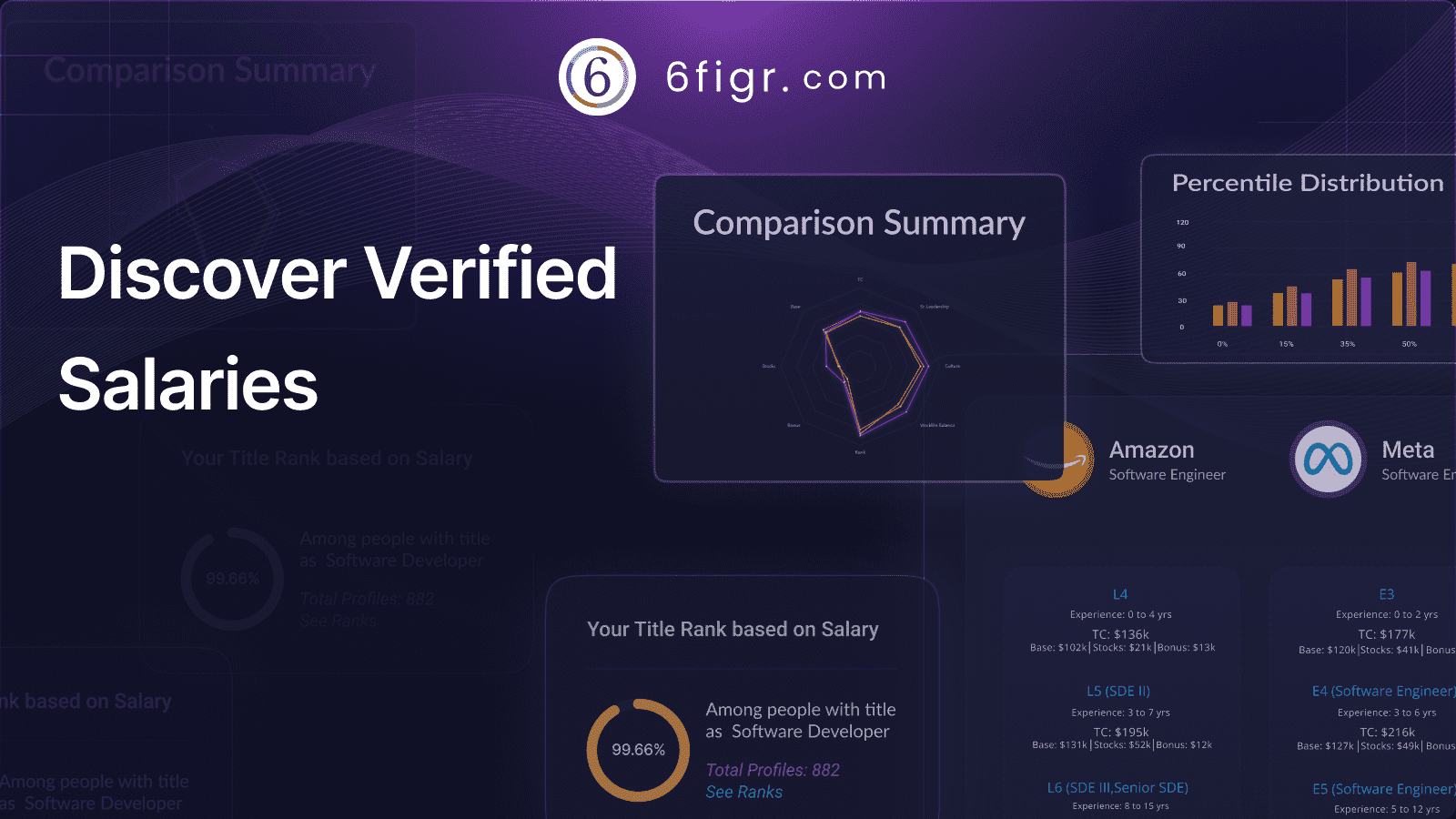
6figr.com is a free AI-driven career service designed to help employees understand their standing in the corporate world. It allows users to search salaries, benchmark their compensation, and compare their market worth with others. The platform provides personalized insights to help individuals navigate their career paths effectively. With its focus on data-driven career insights, 6figr.com aims to empower employees to make informed decisions about their professional development and compensation expectations.

3D-Reconstruction-with-Deep-Learning-Methods
3D-Reconstruction-with-Deep-Learning-Methods is a comprehensive GitHub repository that curates a list of open-source projects centered around 3D reconstruction utilizing deep learning techniques. This resource is specifically designed for AI researchers and deep learning engineers who are actively involved in or interested in the field of 3D vision. The repository provides direct links to various projects, often including details on the deep learning frameworks used (e.g., TensorFlow, PyTorch), associated academic papers, and licensing information. It acts as a central hub for discovering, exploring, and potentially contributing to cutting-edge advancements in 3D reconstruction, making it easier for professionals to find relevant tools and methodologies for their research and development.
rlhf-book
rlhf-book offers a comprehensive guide to Reinforcement Learning from Human Feedback (RLHF), along with a broad introduction to post-training language models. This open-source project aims to document and curate knowledge from the frontier of open models, particularly in the post-ChatGPT era. It provides canonical references for established methods like rejection sampling and explores industry practices for 'Character Training.' The resource includes code for policy gradient methods (PPO, REINFORCE), reward model training, direct alignment methods (DPO), and rejection sampling. It also features detailed book source files and diagrams, making it a valuable learning resource for those interested in the fundamentals of RLHF.
Essay Writing: AI Essay Writer
Essay Writing: AI Essay Writer is a mobile application designed to assist students and professionals in generating academic and creative content efficiently. Leveraging advanced AI, the tool can produce high-quality, structured essays, paragraphs, and stories across various subjects. It offers comprehensive outlines and complete drafts in multiple languages, effectively addressing writer's block. The app focuses on delivering unique and authentic content, making the writing process more streamlined and productive for users seeking to create well-structured and original written pieces.
SmartVocab - An AI Vocab Coach
SmartVocab is an AI-powered English vocabulary coach designed to make learning engaging, entertaining, and enlightening. The platform focuses on contextual and visual learning, utilizing movies, short stories, novels, speeches, and quotes to introduce new vocabulary. Users can improve their English proficiency through visual flashcards, understanding root words, and curated word lists. The tool aims to provide a personalized and scientific approach to vocabulary acquisition, making it suitable for individuals looking to enhance their English communication skills or prepare for standardized tests. It offers a comprehensive learning experience that combines watching, playing, and learning.
awesome-deep-learning
awesome-deep-learning is an extensive, curated list designed for anyone interested in Deep Learning. It serves as a central hub for discovering high-quality educational materials and community resources. The list encompasses a wide array of content, from foundational books and university courses to insightful videos, academic papers, and practical tutorials. It also highlights researchers, relevant websites, datasets, conferences, and various frameworks and tools, making it an invaluable resource for both beginners and experienced practitioners looking to deepen their understanding or find specific information within the Deep Learning domain.
ICCV-2023-25-Papers
ICCV-2023-25-Papers is an open-source GitHub repository dedicated to collecting research papers from the International Conference on Computer Vision (ICCV) for the years 2023-2025. This tool serves as a valuable resource for researchers, academics, and developers interested in cutting-edge advancements in computer vision and deep learning. It aims to provide easy access to published research, often including associated code and supplementary materials, facilitating further study and development in the field of visual intelligence. The repository is maintained on GitHub, ensuring accessibility and collaborative potential for the academic community.
Scholarly: AI Research Helper
Scholarly is an AI-powered platform designed to enhance learning and research for students and academics. It streamlines the study process by offering features like instant flashcard generation from PDFs or YouTube links, an AI tutor for personalized explanations, and adaptive quizzes to identify weak spots. Users can also chat with PDFs for summaries and citations, and convert content into AI lectures, podcasts, and slides. The tool aims to replace scattered study aids with an all-in-one solution, helping users achieve better academic results through efficient research, writing, and studying.
ResearchBuddy AI
ResearchBuddy AI is a mobile application designed to empower students and researchers by streamlining their academic journey. It leverages AI to automate literature reviews, generate concise summaries, and facilitate collaboration within virtual research labs. Users can connect with supervisors, receive AI-powered feedback on drafts, and ensure research integrity with verification tools. This comprehensive platform aims to save time and enhance academic output, making the research process more efficient and effective for individuals at various stages of their academic careers.
EssayPro: Essay Writer app
EssayPro is a comprehensive academic writing service that connects students with a vast network of skilled human writers. The platform facilitates the ordering of custom essays, dissertations, research papers, term papers, and admission essays, among other academic assignments. Users can choose their ideal writer based on profiles, ratings, and success rates across over 140 subjects. EssayPro emphasizes 100% human-written papers, AI and plagiarism control, and offers deadlines from as short as 3 hours. Beyond writing services, it provides a suite of AI-powered study tools including an AI homework helper, AI humanizer, AI detector, citation generator, and grammar checker, making it a versatile resource for students seeking academic assistance and writing support.
Smartick
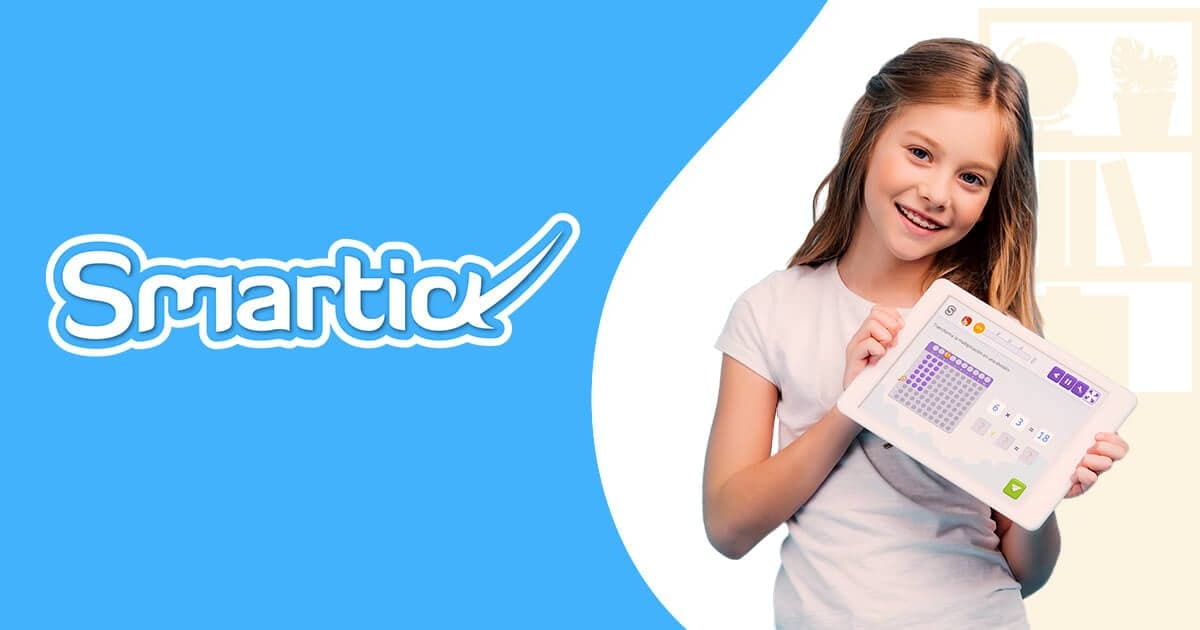
Smartick is an online learning platform designed for children aged 4 to 14, offering personalized programs in mathematics, reading, coding, and critical thinking. The method adapts to each child's individual pace and level through an AI-based program, ensuring a tailored learning experience. After an initial assessment, Smartick generates a unique 15-minute daily session for each student, fostering consistent learning habits. The platform aims to build confidence and deep understanding by focusing on problem-solving and logical reasoning. Endorsed by professors from institutions like MIT and Johns Hopkins, Smartick emphasizes making learning engaging and effective, helping children develop essential skills for life beyond traditional classroom settings.
Prismo
Prismo is an AI-powered second brain designed to help users retain knowledge effectively. It allows users to journal their daily learnings from various sources like podcasts, books, and conversations. The tool's 'Brain Sync' AI automatically extracts key knowledge from these entries, organizing it into searchable folders and an interactive knowledge graph. To ensure long-term retention, Prismo employs spaced repetition quizzes, generating questions from the user's own knowledge base. It offers multiple quiz modes, tracks memory strength, and is available on iOS and Android, making it a comprehensive solution for personal knowledge management and memory enhancement.
Play On The Toilet
Play On The Toilet offers a unique search engine specifically designed to help users discover mobile games suitable for short, casual play sessions. Users can describe what they want in plain English, such as "short sessions," "one-handed," "offline," or "no energy timers," and the platform instantly finds relevant games. It curates a selection of games that are easy to pick up and put down, requiring minimal commitment, making them ideal for brief breaks throughout the day. The platform aims to solve the common problem of sifting through countless app store titles to find games that fit this specific niche, catering to individuals seeking quick entertainment fillers and streamlining game discovery for casual gamers.
Awesome-AutoDL
Awesome-AutoDL is a comprehensive, curated list of resources dedicated to Automated Deep Learning, with a particular emphasis on Neural Architecture Search (NAS). This open-source project offers an in-depth analysis of the field, making it an invaluable resource for researchers and practitioners. It compiles links to relevant blogs, AutoDL libraries like PyGlove and AutoGluon, and various benchmarks such as NAS-Bench-101 and NATS-Bench. The list is meticulously organized by publication venues from 2017 to 2021, categorizing papers by type (gradient-based, reinforcement learning, evolutionary algorithm, performance prediction, and others), and includes direct links to code repositories where available. It serves as a central hub for staying updated on the latest advancements and foundational works in AutoDL.
3DAudio-Spectrum-Analyzer - One-minute creation by AI Coding Autonomous Agent
3DAudio-Spectrum-Analyzer is an application designed for real-time visualization of audio spectra in a 3D environment. This tool allows users to generate binaural beats, offering a unique auditory experience. Key functionalities include the ability to start and stop audio analysis, calibrate devices for optimal performance, and precisely adjust the frequencies of the binaural beats. Hosted on Hugging Face Spaces, it provides an accessible platform for exploring audio dynamics and sound manipulation. The application is suitable for individuals interested in sound visualization and experimental audio generation.

Paloma
Paloma is an innovative education tool designed to empower Title I districts and Charter Management Organizations (CMOs) by transforming parents into effective teaching partners. The platform offers a mobile web-app that facilitates daily, short-burst tutoring sessions in reading and math, personalized to each student's learning needs and interests. Paloma texts families with daily sessions, structured with 'I do, we do, you do' building blocks, and creates decodable books and math story problems where kids are protagonists. This approach aims to unlock up to 1,000 extra hours of one-on-one instructional time per classroom annually, significantly boosting student academic success and attendance while saving teachers valuable time.
Falcon-H1-Tiny: A series of extremely small, yet powerful language models redefining capabilities at small scale
Falcon-H1-Tiny offers a series of compact language models designed to push the boundaries of AI capabilities at a small scale. These models are available on Hugging Face Spaces and are ideal for research and experimentation. Users can input prompts and receive generated responses from these lightweight but capable AI models, making them suitable for various applications including research paper analysis, data visualization, and the development of small-scale AI applications. The focus on models with 100 million parameters or less makes them particularly efficient and accessible for developers and researchers working with limited resources.
awesome-segment-anything
awesome-segment-anything is a comprehensive repository dedicated to tracking and summarizing research progress related to Segment Anything in the field of Computer Vision. It provides a curated list of papers and projects, covering various applications such as medical image segmentation, inpainting, camouflaged object detection, video frame interpolation, and robotics. The repository is continuously updated with the latest breakthroughs, including new models like SAM 3 and EfficientSAM. It serves as a valuable resource for researchers and academics looking to stay informed about developments and applications of Segment Anything.
Awesome-RGBT-Fusion
Awesome-RGBT-Fusion is a comprehensive, open-source collection dedicated to deep learning-based RGB-T fusion methods, codes, and datasets. This resource is invaluable for researchers and developers working in computer vision, particularly those interested in multispectral data. The collection covers key areas such as Multispectral Pedestrian Detection, RGB-T Aerial Object Detection, RGB-T Semantic Segmentation, RGB-T Crowd Counting, and RGB-T Fusion Tracking. It provides access to various datasets, tools, and a curated list of academic papers with links to PDFs and code repositories. The project actively encourages contributions, making it a dynamic and evolving hub for advancements in RGB-T fusion.
Awesome-RL-VLA
Awesome-RL-VLA is a comprehensive GitHub repository dedicated to Reinforcement Learning of Vision-Language-Action (RL-VLA) models for robotic manipulation. It serves as a curated list of academic papers and resources, offering a detailed overview of various training paradigms, methodologies, and state-of-the-art approaches in the field. The repository categorizes RL-VLA research into Offline, Online, and Test-time RL-VLA, detailing key research directions and adaptation mechanisms for each. It also includes a substantial paper collection with a legend for easy navigation, useful resources covering action optimization, base VLA models, datasets, benchmarks, frameworks, and tools. This resource is invaluable for researchers and academics looking to explore or contribute to the rapidly evolving domain of AI-powered robotic manipulation.
aifeed.fyi
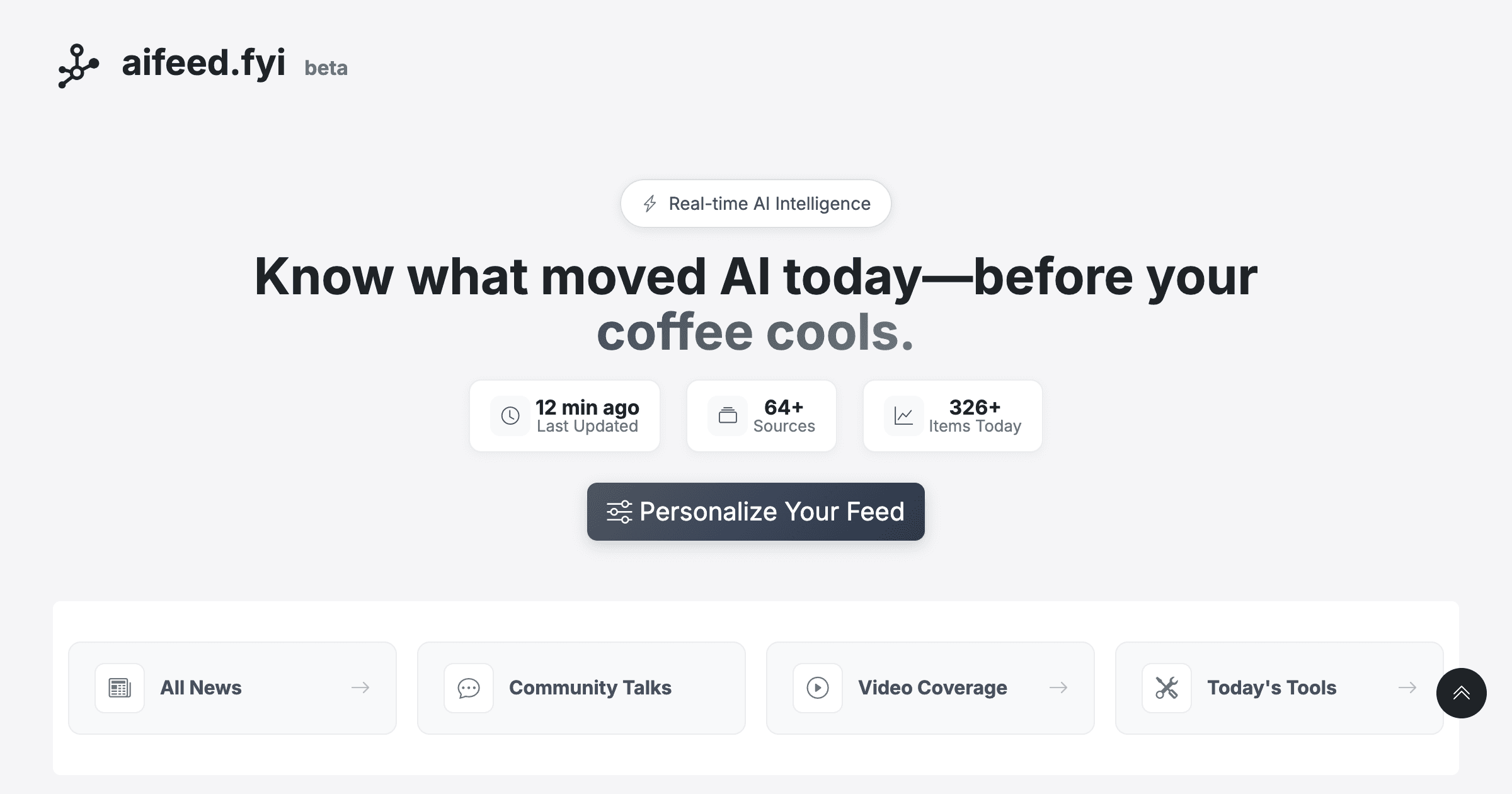
aifeed.fyi offers a real-time AI intelligence feed, aggregating the latest developments, trends, and tools from over 270 sources. It provides a comprehensive overview of what's moving in AI, including top keywords, company trends, product updates, and trending AI models and repositories. Users can explore keyword tag trends, browse by section or topic, and view video updates related to AI. The platform is designed to keep users informed about the rapidly evolving AI landscape, ensuring they stay ahead with daily intelligence.

Scholarjoiner
Scholarjoiner serves as Nigeria's premier education and finance portal, specifically designed to assist students with their academic and financial needs. The platform provides free access to past questions for major Nigerian examinations like JAMB and WAEC, along with CBT practice tests to help students prepare effectively. Beyond exam preparation, Scholarjoiner offers comprehensive information on top scholarships, both local and international, and valuable financial tips. It also includes resources for admission processes, student visas for countries like the UK, USA, and Australia, and guides on student loans. The tool aims to be a one-stop resource for Nigerian students navigating their educational journey and financial planning.
Golinks search powered by chatgpt
GoLinks search powered by ChatGPT revolutionizes internal search capabilities for businesses by integrating advanced AI. This tool allows employees to quickly locate company information and documents using natural language queries, delivering precise and contextually relevant answers. It leverages semantic and lexical analysis to suggest matches even when exact aliases are unknown, significantly improving searchability and discovery across an organization's internal knowledge base. By centralizing knowledge and reducing friction with long URLs, GoLinks enhances workplace efficiency and productivity, making it easier for teams to access shared digital resources.