
Research & Education
Browsing page 338 of AI tools for Research & Education. Sorted by confidence score — our independent quality rating.

VM-UNet
VM-UNet is an open-source code repository for 'Vision Mamba UNet for Medical Image Segmentation,' a novel U-shape architecture model designed for medical image segmentation. It addresses the limitations of CNNs in long-range modeling and the quadratic computational complexity of Transformers by utilizing State Space Models (SSMs), specifically Mamba. The tool introduces the Visual State Space (VSS) block as its foundation to capture extensive contextual information and employs an asymmetrical encoder-decoder structure. VM-UNet has demonstrated competitive performance on datasets like ISIC17, ISIC18, and Synapse, aiming to establish a baseline for efficient and effective SSM-based segmentation systems in medical imaging.
🐍💨 Data Contamination Database
The 🐍💨 Data Contamination Database is a Hugging Face Space designed to help users identify and manage data contamination within datasets and models. This application provides functionalities to filter and view data specifically related to contamination. Users can input particular evaluation datasets and contaminated sources, and then select various options to exclude or analyze these issues. It serves as a crucial resource for AI researchers and data scientists aiming to ensure the integrity and reliability of their data, ultimately leading to more robust and accurate AI models. The tool is hosted on Hugging Face Spaces, making it accessible for a wide range of users.
Oscr
Oscr is an AI-powered content transformation tool designed to help businesses boost their brand's reach and drive product engagement. It allows users to quickly convert any content, from news articles to YouTube videos, into personalized, publish-ready blog or social media posts. The platform offers real-time content discovery to help users stay ahead of industry trends and streamline research. With its contextual intelligence, Oscr enables tailoring content to a unique audience by leveraging existing data and materials. This versatile creation process helps maximize impact and minimize effort, making it ideal for growth, marketing, and branding teams looking to accelerate growth and convert more leads.

RoadGauge Ltd
RoadGauge Ltd offers an innovative solution for 3D road analysis, leveraging AI technology and readily available hardware like GoPro cameras. Users can mount a camera, record a drive, and upload the video to RoadGaugeAI for processing. The platform then reconstructs the road in 3D, providing sectional profiles with defects measured and geotagged to millimeter accuracy. It identifies safety hazards, profiles road surfaces, and helps locate, classify, and manage transport assets. This cost-effective system allows users to own their hardware, reduce inspection capital expenses, and receive survey results in various formats like PDF, KML, GPX, and CSV, with fast delivery times.
SciSpace by Typeset
SciSpace by Typeset is an advanced AI research agent designed to significantly accelerate academic workflows. It integrates with over 150 research tools, allowing users to efficiently search through a vast database of 280 million papers. The platform supports systematic reviews, assists in drafting manuscripts, and even helps match research to suitable journals. Key features include a Biomedical Agent, AI Writer, Chat with PDF, Literature Review tools, and a Citation Generator. SciSpace aims to reduce research time by up to 90% by automating many common research tasks and providing citation-backed results, making it an invaluable tool for researchers and students alike.
SWARM Biotactics
SWARM Biotactics specializes in creating Biobots and autonomous cyborg swarms capable of entering, sensing, and reporting in environments where traditional technology cannot operate. Their system, SWARM OS, provides mission control, swarm autonomy, and sensor fusion, enabling persistent presence and real-time intelligence gathering. This technology is designed for critical applications in defense, security, police, and search & rescue, offering solutions for GPS-denied, cluttered, and high-risk terrains. SWARM Biotactics focuses on providing low-signature, always-on ground truth, reducing risk and protecting personnel and infrastructure.
AI Huberman
AI Huberman is an AI-powered tool designed to simplify and provide insights from the extensive Huberman Lab podcast content. Users can ask science and health-related questions and receive AI-driven answers derived directly from podcast transcripts. The platform also offers timestamped links to relevant YouTube videos, allowing users to delve deeper into specific topics. Additionally, it provides personalized episode recommendations based on user queries and interests. This tool is ideal for anyone looking to quickly access and understand complex neuroscience and health information discussed in the Huberman Lab podcast, presented in clear, jargon-free language.

Quad AI School of Technology & Management
Quad AI School of Technology & Management is a leading professional education institute offering industry-driven, career-focused academic programs designed to prepare students for real-world success. The curriculum is co-curated by IIT & IIM alumni and integrates AI from day one across various programs, including Computer Science, Management, and BCA. Quad AI emphasizes practical learning, project-based experiences, and dedicated career development support, including mentorship by MAANG leaders and 100% placement assistance. Students benefit from corporate competitions, workshops, masterclasses, internships, and an entrepreneurship culture with startup funding opportunities. The institute aims to build confident, skilled, and career-ready graduates through its modern learning infrastructure and industry-aligned training.
Neural-Network-Visualisation
Neural-Network-Visualisation offers an interactive web-based visualization for a compact multi-layer perceptron, specifically trained on the MNIST handwritten digit dataset. Users can draw digits on a 28x28 grid and observe in real-time how activations propagate through the 3D network. The tool also displays prediction probabilities, providing a clear understanding of the neural network's decision-making process. It highlights the strongest incoming connections per neuron and uses color-coding to represent activation sign and magnitude. The project is open-source and provides Python helper scripts for training the MLP and exporting weights, supporting Apple Metal, CUDA, or CPU acceleration. It also includes a timeline export feature, allowing users to scrub through different training checkpoints.
oie-resources
oie-resources offers a comprehensive, curated list of resources focused on Open Information Extraction (OIE). This GitHub repository serves as a central hub for researchers and academics, providing access to a wide array of materials including research papers sorted chronologically and by category, code implementations, and datasets. It covers not only core OIE systems but also related work such as taxonomizing open relations and various downstream applications like Question Answering, Knowledge Base Population, and Event Extraction. The resource also features information on OIE systems for different languages, supervised OIE, PhD theses, and demos, making it an invaluable reference for anyone working in the field of natural language processing and information extraction.

FocalRead
FocalRead is an innovative speed reading application designed for iPhone and iPad users, enabling them to read up to three times faster. Utilizing Rapid Serial Visual Presentation (RSVP) technology, it displays one word at a time, eliminating eye movement and reducing subvocalization to enhance focus and comprehension. Users can import a wide range of content, including PDFs, ePUBs, DOCX files, web articles, X (Twitter) posts, and Reddit threads. The app offers adjustable reading speeds, dark mode support, chapter navigation, and progress tracking, making it a versatile tool for students, professionals, and anyone looking to improve their reading efficiency and focus.
Course.im
Course.im provides a free platform for creating and sharing online courses, designed to be user-friendly with AI assistance. It offers an intuitive drag-and-drop editor, similar to Notion, for easy content creation and customization. Users can add multimedia elements and organize lessons efficiently without needing technical skills. The platform includes a website builder, enabling the creation of unlimited courses and websites, with the option to connect a custom domain. Courses can be easily embedded into existing websites, much like a YouTube video, by simply copying and pasting a code snippet. This tool is part of the Website.im ecosystem, offering additional features like website building and logo generation.

Qvantify
Qvantify automates qualitative research by using AI to conduct remote interviews, allowing organizations to gather hundreds of deep feedback interviews daily. The platform enables continuous discovery, market expansion assessment, and solution validation by letting AI interact with customers and users. It combines the simplicity of surveys with the depth of in-depth interviews, offering features like white-labeling for brand customization and localization for conducting interviews in over a hundred languages. Qvantify also provides a REST API for data access and future features include a customer portal, voice input, and outbound calling, making it a comprehensive tool for scalable qualitative feedback.

Learn Creole with Jorge
Learn Creole with Jorge is a comprehensive language learning platform designed to make mastering Haitian Creole accessible and enjoyable for all ages. The tool offers a variety of engaging features, including interactive games that transform learning into play, and a rich collection of music and videos that immerse users in Haitian culture. Learners can track their progress with badges and streaks, staying motivated as they build their skills. Whether the goal is to connect with family, deepen a relationship with a Haitian partner, prepare for travel to Haiti, or simply enjoy the process of learning a new language, Learn Creole with Jorge provides a fun and meaningful pathway to fluency.

KnowledgeNet.ai
KnowledgeNet.ai offers AI Engage™, a platform designed to transform insight into consistent revenue by bridging the gap between sales enablement strategy and revenue execution. It provides advanced outbound intelligence specifically for B2B sales teams. The tool aims to help businesses discover opportunities and accelerate decision-making by leveraging AI to manage and utilize corporate conversations and enterprise knowledge. By linking transactional conversations and data repositories, KnowledgeNet.ai creates a cohesive view of intellectual capital, enabling more effective sales strategies and improved revenue generation.

Reliant AI
Reliant AI is an applied AI tool designed for the life sciences industry, simplifying the labor-intensive process of collecting, organizing, and inspecting vast amounts of complex data. It combines a standardized AI engine with customized solutions to work alongside biopharma teams, from portfolio strategy to launch success prediction. The platform offers high-confidence planning and insights by transforming commercial decision-making with advanced ML and reinforcement learning models tailored to life sciences data. Key features include automated ingestion with expert annotation for high precision, life-science-specific AI that makes fewer errors than general tools, and the ability to connect current assets to commercial outcomes through densified Knowledge Graphs. It accelerates systematic reviews by screening and extracting data from full-text PDFs and conference documents, ensuring total accountability by tracing findings back to original sources.

Modern Mindset
Modern Mindset is a Dutch e-learning platform dedicated to empowering educational professionals with the knowledge and tools to effectively and safely implement AI in their work. The platform offers a comprehensive approach, covering AI knowledge through short, applicable lessons, both physically and via an e-learning platform. It provides practical advice on change management, communication, and curriculum integration, tailored to individual schools. Modern Mindset also fosters a community for professionals to exchange experiences and learn from practical examples. Key offerings include AI Wetwijzer for navigating AI legislation and privacy, Master AI for foundational AI skills, and Deepdive X for concrete applications like lesson preparation and differentiation. The platform emphasizes building an adaptive organizational culture through AI Mindset, promoting ownership and trust.
RLzoo
RLzoo is a comprehensive open-source reinforcement learning zoo designed for simple usage, implemented with TensorFlow 2.0 and leveraging the neural network layer APIs of TensorLayer2.0+. It offers a hands-on approach for reinforcement learning practices and benchmarks, supporting basic toy-tests like OpenAI Gym and DeepMind Control Suite with minimal configuration. Additionally, RLzoo supports robot learning environments such as RLBench. The platform provides both implicit and explicit configuration interfaces for running learning algorithms, making it flexible and convenient for users. It also supports distributed training across multiple computational nodes using the Kungfu package, catering to more realistic and large-scale scenarios.
slime
slime is an advanced post-training framework designed for Reinforcement Learning (RL) scaling, specifically tailored for large language models. It achieves high-performance training by seamlessly integrating Megatron with SGLang, enabling efficient and scalable operations. The framework supports flexible data generation through custom data workflows, allowing users to adapt to various training requirements. slime facilitates efficient training across different modes, making it a versatile solution for developers and researchers working with large language models and RL applications. Its focus on performance and flexibility makes it suitable for complex AI development tasks.
cornell-cs5785-2020-applied-ml
This GitHub repository, cornell-cs5785-2020-applied-ml, serves as a comprehensive resource for the Applied Machine Learning course at Cornell Tech. It provides teaching materials, including executable course notes and slides, designed for the online edition of the Fall 2020 course. These materials are intended to complement a series of YouTube lecture videos, offering students and educators a complete learning package. The repository is organized with notebooks for interactive learning and a requirements.txt file to facilitate easy setup of the necessary virtual environment, ensuring all content can be run smoothly.
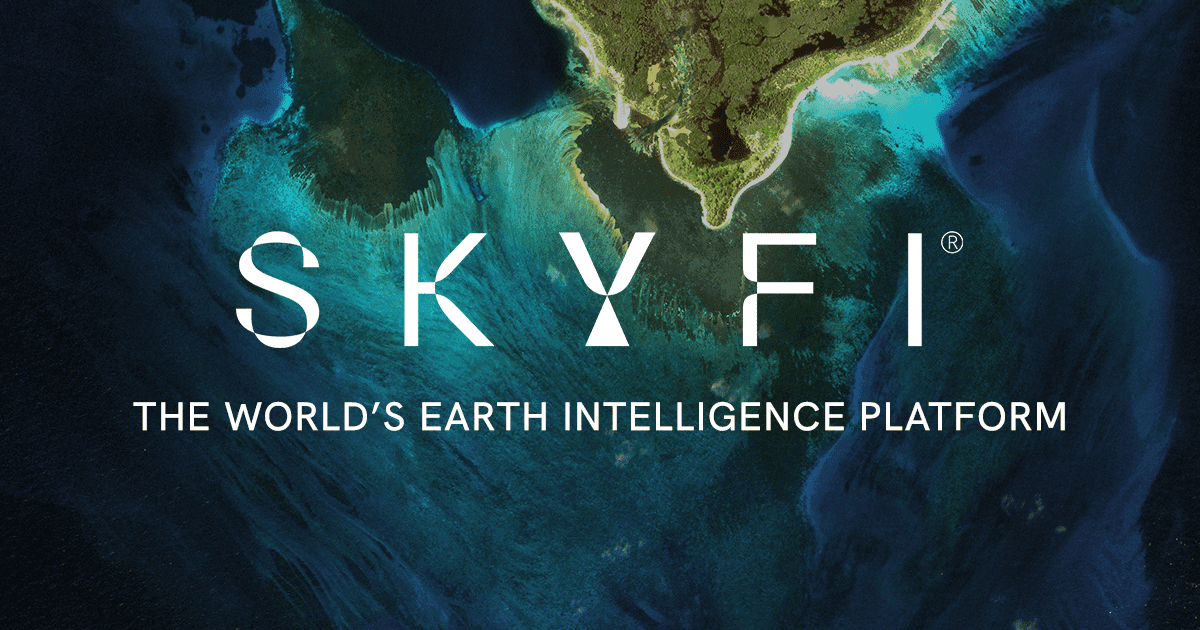
SkyFi
SkyFi is an Earth intelligence platform offering instant access to satellite imagery and geospatial analytics. Users can order and task satellite imagery and SAR from top providers, access a vast archive of data, and download geospatial data and analytics through a unified platform. Key features include advanced analytics like object detection and hyperspectral signature analysis, commercial imagery tasking, and access to open data. SkyFi also provides specialized access to constellations like Vantor and Planet SkySat, as well as Maritime AIS data and ICEYE US Direct SAR intelligence, catering to diverse needs from agriculture to military and defense.

Hikewise
Hikewise is India's most advanced career development platform, offering comprehensive career assessment, counseling, and guidance programs. It caters to a wide range of individuals including school students, college students, graduates, and working professionals. The platform helps users discover their perfect career path, stream, college, and course through expert guidance. Hikewise aims to provide personalized support for career planning and development, ensuring individuals make informed decisions about their future. The service is designed to be a leading resource for career counselors in India, providing valuable insights and support for various stages of career progression.
TencentPretrain
TencentPretrain is a powerful PyTorch-based framework designed for pre-training and fine-tuning AI models, supporting various data modalities including text and vision. Its modular architecture facilitates the use of existing pre-training models and provides clear interfaces for users to further develop and customize their own models. This makes it an ideal solution for researchers and developers looking to experiment with or deploy advanced AI models. The framework emphasizes flexibility and extensibility, allowing for adaptation to diverse research and application needs in the AI domain.
QOwnNotes
QOwnNotes is a versatile open-source notepad and todo-list manager designed for GNU/Linux, macOS, and Windows. It offers robust Markdown support and integrates seamlessly with Nextcloud Notes and ownCloud Notes, allowing users to write, edit, and search notes across devices. Notes are stored as plain text Markdown files, ensuring maximum freedom and compatibility with other sync tools like Syncthing or Dropbox. Key features include multiple note folders, restoration of older note versions from Nextcloud/ownCloud, sub-string searching, customizable keyboard shortcuts, and external file change monitoring. The tool also boasts Markdown highlighting, inline image previews, wiki-style note links, spellchecking, and built-in AI support with script integration for providers like OpenAI and Groq. It also includes an MCP server for external AI agents to securely fetch notes.