
Research & Education
Browsing page 344 of AI tools for Research & Education. Sorted by confidence score — our independent quality rating.

Lexigo
Lexigo is an award-winning, triple ISO-certified translation agency specializing in professional translation services and multicultural communication. It offers NAATI-certified human translation across 171 languages for business, enterprise, and government clients in Australia. The platform leverages AI-powered translation tools combined with human quality assurance to ensure accuracy and cultural sensitivity. Beyond translation, Lexigo provides a full suite of multicultural communication services including transcreation, multilingual desktop publishing, video production, website and app localization, and multicultural campaign strategy. Their proprietary platform, CORE+, includes features like translation memory, automated workflow management, and secure file handling, aiming to deliver faster turnaround without compromising quality.
MCP Web Search
MCP Web Search is an AI tool designed to empower the Gemini AI model with real-time web search capabilities. Hosted as a Hugging Face Space by deep-div, this application allows users to enter a search query and receive information directly from Google. The tool then presents these search results in a readable format, effectively bridging the gap between Gemini's knowledge base and the most current information available on the web. This functionality is crucial for AI models that require up-to-date data for accurate responses and informed decision-making, making it a valuable resource for developers and researchers working with Gemini.
awesome-self-supervised-gnn
awesome-self-supervised-gnn is a comprehensive repository featuring a curated list of academic papers focused on self-supervised learning within the domain of Graph Neural Networks (GNNs). The collection is meticulously organized by publication year, providing a structured overview of advancements in the field. This resource is invaluable for researchers, academics, and practitioners who need to explore, understand, and implement the latest self-supervised learning techniques for GNNs. It helps users quickly identify influential papers, indicated by a '🔥' for highly cited works, and often includes direct links to both the paper and its associated code, facilitating deeper engagement with the research.
GazeML
GazeML is a deep learning framework built on Tensorflow, designed for training high-performance gaze estimation models. It provides a robust platform for researchers and developers to implement and test various gaze estimation algorithms. The framework currently integrates re-implementations of published algorithms such as ELG (Eye region Landmarks based Gaze Estimation) and DPG (Deep Pictorial Gaze Estimation). While it may work on various platforms, it has been specifically tested on Ubuntu 16.04. Users can install dependencies, acquire pre-trained weights, and run webcam demos, making it a practical tool for advancing research in eye tracking and human-computer interaction.
Stable Video Diffusion 1.1
Stable Video Diffusion 1.1 is an AI tool available on Hugging Face that specializes in generating short video clips from still images. Users can upload any picture and customize the output by adjusting settings such as motion intensity and frame rate. The application then converts the image into a 4-second video, which is saved and made available for download. This tool is ideal for quickly creating dynamic visual content from static images, offering a straightforward solution for various creative and promotional needs. Its accessibility on Hugging Face makes it a convenient option for users looking for an easy-to-use video generation platform.
shapiq
shapiq is a Python package designed for machine learning explainability, specifically focusing on Shapley Interactions and Shapley Values. It provides tools for approximating any-order Shapley interactions, benchmarking game-theoretical algorithms, and explaining feature interactions within model predictions. The library extends the functionality of the well-known SHAP package, offering a more comprehensive view of machine learning models by quantifying synergy effects between features, data points, or weak learners. It supports various interaction indices like k-SII, SV, FBII, and FSII, and includes functionalities for visualizing feature interactions through network plots. shapiq is intended for Python 3.12 and above, and can be installed via uv or pip.
OFA-Visual_Question_Answering
OFA-Visual_Question_Answering is an AI tool hosted on Hugging Face Spaces, designed for visual question answering. Users can interact with the tool by uploading an image and then posing questions related to the image's content. The application processes the visual input and the textual query to generate a relevant answer. While the live website currently shows a runtime error, the intended functionality is to analyze images and provide responses, making it useful for understanding visual data through natural language queries. It leverages an underlying AI model to interpret both the image and the question for comprehensive answers.
Hoarder
Karakeep is an open-source bookmark manager designed for comprehensive digital content storage and cataloging. It allows users to quickly save links, notes, and images, which are then automatically tagged using AI for faster retrieval. Built for data hoarders, Karakeep provides a complete toolkit for organizing and rediscovering content, including collaborative lists, RSS feed integration, and a powerful rule engine for custom automation. It supports full-text search, highlights on saved pages, and offers browser extensions and native apps for seamless access. Karakeep is self-hostable with Docker, ensuring privacy and control over data, and also provides a REST API and webhooks for integration with other services.
Metrics
Metrics is an open-source toolbox offering implementations of various supervised machine learning evaluation metrics across multiple programming languages. Developers and researchers can utilize this tool to assess model performance in Python, R, Haskell, and MATLAB/Octave environments. It includes a wide array of metrics such as Absolute Error, Area Under the ROC, F1 Score, Log Loss, Mean Absolute Error, Mean Squared Error, and Root Mean Squared Error. The project is currently in a beta release, focusing on ensuring compatibility and functionality across its supported language repositories. It aims to provide a comprehensive suite for evaluating machine learning models.
One Stop For Open Source Models (OSFOSM)
One Stop For Open Source Models (OSFOSM) is a Hugging Face Space designed to facilitate text generation using a variety of open-source AI models. This application provides a user-friendly interface where individuals can select specific tasks, choose from a range of available open-source models, and adjust settings to fine-tune their text generation. It serves as a convenient platform for experimenting with different models and understanding their capabilities without needing to set up complex environments. The tool is accessible directly through Hugging Face, making it easy for users to get started with text generation.

Werk in het Vooruitzicht
Werk in het Vooruitzicht is an AI-driven platform designed for individuals seeking to change or advance their careers in IT. It provides tools to discover suitable professions based on unique skills and talents, offering insights into what truly aligns with personal strengths. The platform features an AI Skills Navigator to develop necessary skills through personalized learning paths and training. Users receive personal guidance and support to achieve their career goals. Additionally, it offers access to an exclusive network of employers, facilitating new career opportunities in the IT sector. Key features include personality tests, over 22,000 online courses, tailored learning trajectories, and a CV generator.

Math Playground
Math Playground is a brain-training website designed for children, offering a wide array of free online math games and logic puzzles. The platform aims to make learning math fun and exciting by combining educational content with engaging gameplay. It features over 100 math games covering basic skills like addition, subtraction, multiplication, division, fractions, decimals, and place values, as well as logic and pre-algebra games. The games are designed to support Common Core and state standards, making them suitable for practice, enrichment, and review in educational settings. Math Playground emphasizes problem-solving, encouraging children to experiment, recognize patterns, and develop flexible thinking.
multiagent-particle-envs
multiagent-particle-envs offers a foundational code environment for researchers to explore multi-agent systems, particularly in the context of mixed cooperative-competitive environments. This tool, developed by OpenAI, provides a simple multi-agent particle world with continuous observation and discrete action spaces, alongside basic simulated physics. It was specifically used in the paper "Multi-Agent Actor-Critic for Mixed Cooperative-Competitive Environments." While the original repository is archived and read-only, a maintained version with numerous fixes, comprehensive documentation, pip installation support, and compatibility with current Python versions is available in PettingZoo. The environment allows for the creation and testing of various scenarios, including cooperative navigation, predator-prey dynamics, and communication tasks.
OmniTalker
OmniTalker is an AI tool available on Hugging Face that allows users to generate customized speech videos. Users can select a character, input text in either Chinese or English, and fine-tune parameters such as seed and speech speed to create unique video outputs. The tool is presented as an official demo for OmniTalker, suggesting its primary purpose is for demonstration or research in speech synthesis and voice cloning. While the live website currently shows a runtime error, the meta description indicates its intended functionality for creating personalized speech content.
AIRS
AIRS, or Artificial Intelligence Research for Science, is an open-source initiative offering a comprehensive collection of software tools, datasets, and benchmarks. It is specifically designed to support research in AI for quantum mechanics, density functional theory, small molecules, protein science, materials science, molecular interactions, biological science, partial differential equations, and ordinary differential equations. The project's goal is to foster an integrated, open, reproducible, and sustainable set of resources to advance the emerging field of AI for Science. It includes various methods and resources, with the list continuously expanding as research progresses, making it a valuable resource for academic and scientific communities.
OmniGlue - Feature Matching
OmniGlue - Feature Matching is an AI tool available on Hugging Face that allows users to upload two images and receive an analysis of their similarities. The application identifies and highlights matching features between the images, providing a visual representation of their correspondence. This tool leverages foundation model guidance to perform feature matching, making it valuable for tasks requiring image comparison and analysis. It is designed to help users, particularly those in computer vision research and AI development, understand the relationships and common elements between different visual inputs. The tool is offered free of charge, making it accessible for experimentation and research purposes.
NSFW-3B
NSFW-3B is an open-source AI model available on Hugging Face, designed for users interested in interacting with a chatbot that generates responses based on dark and unrestricted prompts. This tool provides a platform for exploring AI capabilities without typical content restrictions. Users have the flexibility to fine-tune the AI's behavior by adjusting parameters such as temperature and top-p, which control the randomness and diversity of the generated text. The model is marked as containing sensitive content, indicating its focus on unfiltered and potentially controversial topics. It is suitable for those seeking an AI experience that pushes boundaries and explores less conventional conversational avenues.
PiML-Toolbox
PiML-Toolbox (Python Interpretable Machine Learning) is a comprehensive Python toolbox designed for the development and diagnostics of interpretable machine learning models. It offers both low-code interfaces and high-code APIs, supporting a growing list of inherently interpretable ML models such as GLM, GAM, Tree, FIGS, XGB1, XGB2, EBM, GAMI-Net, and ReLU-DNN. The toolbox facilitates various outcome testing, including accuracy, explainability (PFI, PDP, ALE, LIME, SHAP), fairness, weak spot identification, overfitting detection, reliability assessment, robustness, and resilience evaluation. PiML-Toolbox aims to empower model developers and validators with tools for transparent, interpretable, and robust machine learning, particularly in high-stakes regulatory settings.
NotesNudge
NotesNudge is an AI-powered tool designed to help users rediscover and leverage their past thoughts and insights by delivering a single, relevant note from their history to their inbox daily. This unique approach transforms dormant notes into an active dialogue with one's previous self, fostering continuous learning and reflection. It seamlessly integrates with your favorite note-taking apps, ensuring you don't lose the wisdom contained within your notes. NotesNudge aims to inspire, not overwhelm, by providing a gentle daily nudge that can spark new ideas or bring a nostalgic feeling. The system allows users to schedule their daily nudges at their preferred time and offers AI-powered search for instant clarity.

Youtube Summarizer : FlashTube
FlashTube is an AI-powered mobile application designed to enhance learning and efficiency from YouTube videos. It provides users with AI-generated summaries and extracts key points from video content. For premium subscribers, FlashTube offers advanced features including unlimited video processing, custom instructions for summaries, quiz generation from videos, and flashcard creation. The tool is ideal for students, professionals, self-learners, content creators, trainers, and YouTube enthusiasts looking to quickly grasp video content, prepare for exams, or retain information more effectively. The process involves pasting a YouTube URL, with the backend extracting transcripts and AI generating the summary and other learning aids.
SemanticSegmentation_DL
SemanticSegmentation_DL is a valuable repository for researchers and practitioners focused on semantic segmentation using deep learning. It compiles an extensive list of academic papers, resources, and implementations of various semantic segmentation models, including DeepVO, Deeplab-v2, and U-net. The repository also provides links to numerous datasets crucial for training and evaluating these models, such as VOC2012, CitySpaces, Mapillary, and ADE20K. This resource is designed to support the academic community by centralizing information on state-of-the-art techniques and datasets, making it easier to explore advancements and conduct research in the field of semantic segmentation.

VillageZ
VillageZ is an engaging pixel-art survival city-builder game that challenges players to construct and conquer. The core gameplay revolves around gathering essential resources, recruiting new villagers to expand the community, and strategically building a thriving village. A key aspect of survival in VillageZ involves defending the settlement from various enemies, adding a combat dimension to the city-building mechanics. This browser-based game offers a blend of resource management, strategic construction, and defensive combat, all presented in a charming pixel-art style. It provides an immersive experience for players who enjoy building and managing their own virtual communities while facing survival challenges.
PyTorchStepByStep
PyTorchStepByStep is the official GitHub repository for the book "Deep Learning with PyTorch Step-by-Step: A Beginner's Guide." This open-source resource offers a comprehensive collection of Jupyter notebooks, with one notebook corresponding to each chapter of the book. Users can run these notebooks to reproduce the code examples and outputs presented in the book, fostering a hands-on learning experience. The repository has been revised for PyTorch 2.x, addressing updates in PyTorch, Torchvision, HuggingFace, and other libraries. It provides flexible options for execution, including Google Colab, Binder for cloud-based access, and detailed instructions for local installation using Anaconda, Conda environments, PyTorch, TensorBoard, and optional GraphViz/TorchViz setup.
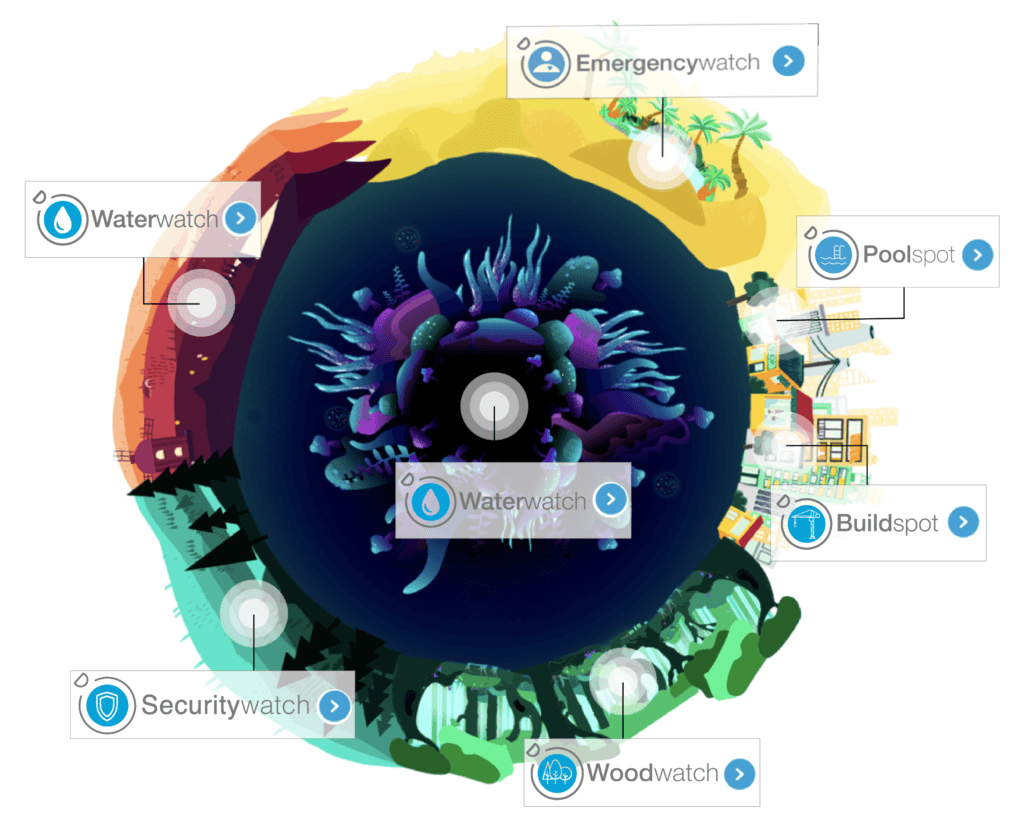
Pixstart
Pixstart offers innovative solutions for public and private actors to better manage and monitor the ecology of territories using satellite data and AI. The tool helps track the evolution of environments, providing insights into water quality, forest health, and complex environmental zones. It enables users to monitor natural resources and exploitation infrastructures, conduct comprehensive environmental diagnostics, and receive advice on actions to take. Pixstart's tools assist in identifying and adjusting best practices to support and improve ecosystems, addressing challenges posed by climate change and human activities with significant economic and health repercussions.