
Research & Education
Browsing page 345 of AI tools for Research & Education. Sorted by confidence score — our independent quality rating.

TAP
TAP is transforming youth employment across Palestine, Lebanon, and Jordan by blending AI innovation with the power of networks. This platform offers AI-driven tools, personalized coaching, and mentor support to help job seekers land meaningful roles. It connects talent, employers, and global allies to build sustainable careers and stronger futures for MENA youth. TAP's approach includes carefully selected and vetted talent, mentorship, and coaching, creating a pool of skilled, job-ready professionals. The platform also facilitates partnerships with NGOs, international organizations, and employers to enhance employability across the MENA region, offering programs in software development, business development, and digital marketing.

PINNpapers
PINNpapers is a comprehensive, open-source repository maintained by the IDRL lab, dedicated to curating essential research papers on Physics-Informed Neural Networks (PINNs). Since PINNs have gained significant traction in scientific computing, this resource serves as a valuable collection of representative works in the field. The repository categorizes papers across various aspects of PINNs, including foundational models, parallel computing approaches, acceleration techniques, model transfer and meta-learning, probabilistic PINNs, uncertainty quantification, and diverse applications. It also lists relevant software libraries like DeepXDE and SciANN, providing links to papers and code where available. Researchers and practitioners can use this resource to stay updated on the latest advancements and foundational concepts in PINN research.
Oscr
Oscr is an AI-powered content transformation tool designed to help businesses boost their brand's reach and drive product engagement. It allows users to quickly convert any content, from news articles to YouTube videos, into personalized, publish-ready blog or social media posts. The platform offers real-time content discovery to help users stay ahead of industry trends and streamline research. With its contextual intelligence, Oscr enables tailoring content to a unique audience by leveraging existing data and materials. This versatile creation process helps maximize impact and minimize effort, making it ideal for growth, marketing, and branding teams looking to accelerate growth and convert more leads.
Model Medicines
Model Medicines is an AI-driven company dedicated to building better medicines by innovating at the intersection of data science, biology, and drug development. The platform utilizes AI to model chemistry and human biology, accelerating the discovery and development of life-changing drugs. With 192 compounds and 67 validated assets in disease-relevant cellular models across 12 therapeutic targets, Model Medicines focuses on areas such as virology, oncology, inflammation, and longevity. Their proprietary GALILEO™ and AmesNet™ technologies enable ultra-large virtual screening and agentic AI breakthroughs, leading to the identification of best-in-class potential therapeutics, such as MDL-001, a direct-acting, broad-spectrum antiviral.
One Stop For Open Source Models (OSFOSM)
One Stop For Open Source Models (OSFOSM) is a Hugging Face Space designed to facilitate text generation using a variety of open-source AI models. This application provides a user-friendly interface where individuals can select specific tasks, choose from a range of available open-source models, and adjust settings to fine-tune their text generation. It serves as a convenient platform for experimenting with different models and understanding their capabilities without needing to set up complex environments. The tool is accessible directly through Hugging Face, making it easy for users to get started with text generation.

AI Hub Albania
AI Hub Albania is a non-profit organization dedicated to fostering an open, collaborative AI community. It serves as a platform for AI enthusiasts, researchers, and professionals to connect, learn, and innovate. The hub provides resources, events, and opportunities for members to engage in discussions, contribute to cutting-edge research, and access tools designed to shape the future of AI. Key activities include organizing AI meetups, hackathons, public lectures, policy discussions, and workshops focused on AI education and innovation. AI Hub also supports AI-driven startups with mentorship, funding opportunities, and networking, aiming to drive meaningful progress and ethical AI development.
pytorch_diffusion
pytorch_diffusion offers a PyTorch reimplementation of Denoising Diffusion Probabilistic Models, complete with checkpoints converted from the original TensorFlow implementation. This tool allows users to load diffusion models with pretrained weights for various datasets like CIFAR-10, LSUN-bedroom, LSUN-cat, and LSUN-church. It provides a quickstart guide for running a Streamlit demo, making it accessible for immediate use. Users can also instantiate and configure the U-Net model for denoising independently. The repository includes instructions for producing samples, evaluating results against TensorFlow models, and converting TensorFlow checkpoints to PyTorch, making it a comprehensive resource for researchers and developers working with diffusion models.
Unit 1 Quiz - AI Agent Fundementals
Unit 1 Quiz - AI Agent Fundementals is an interactive quiz designed to assess and reinforce understanding of core AI agent concepts. Hosted on Hugging Face Spaces, this tool allows users to log in with their Hugging Face account and tackle a series of questions. Upon achieving a passing score, participants are awarded a personalized certificate image, which can optionally include a custom name. This makes it an excellent resource for students and professionals looking to validate their knowledge in AI agent fundamentals and obtain a tangible record of their achievement.
OFA-Visual_Question_Answering
OFA-Visual_Question_Answering is an AI tool hosted on Hugging Face Spaces, designed for visual question answering. Users can interact with the tool by uploading an image and then posing questions related to the image's content. The application processes the visual input and the textual query to generate a relevant answer. While the live website currently shows a runtime error, the intended functionality is to analyze images and provide responses, making it useful for understanding visual data through natural language queries. It leverages an underlying AI model to interpret both the image and the question for comprehensive answers.
Awesome Foundation Model Leaderboard Search
Awesome Foundation Model Leaderboard Search is a specialized tool hosted on Hugging Face Spaces, designed to help users navigate a comprehensive list of over 400 foundation model leaderboards. This application enables efficient searching through a vast collection of AI model rankings, providing direct access to detailed entries from the Awesome Foundation Model Leaderboard List. It's an invaluable resource for AI researchers, developers, and practitioners who need to quickly find and compare the performance of various foundation models, streamlining the process of staying updated with the latest advancements in the field.
Clothing Segmentation
Clothing Segmentation is an AI tool developed by MadeWithAI, available as a Hugging Face Space, designed to identify and segment specific clothing items within an uploaded image. Users can upload an image and then interactively select the clothing items they wish to segment. The tool processes the selection and generates a new image that highlights only the chosen clothing, effectively isolating it from the rest of the image. This functionality is particularly useful for tasks requiring precise extraction of apparel, such as fashion design analysis, retail image processing, or computer vision research where automated analysis of clothing items is needed. Its accessibility as a Hugging Face Space makes it easy to use for various applications.
3D2cut SA
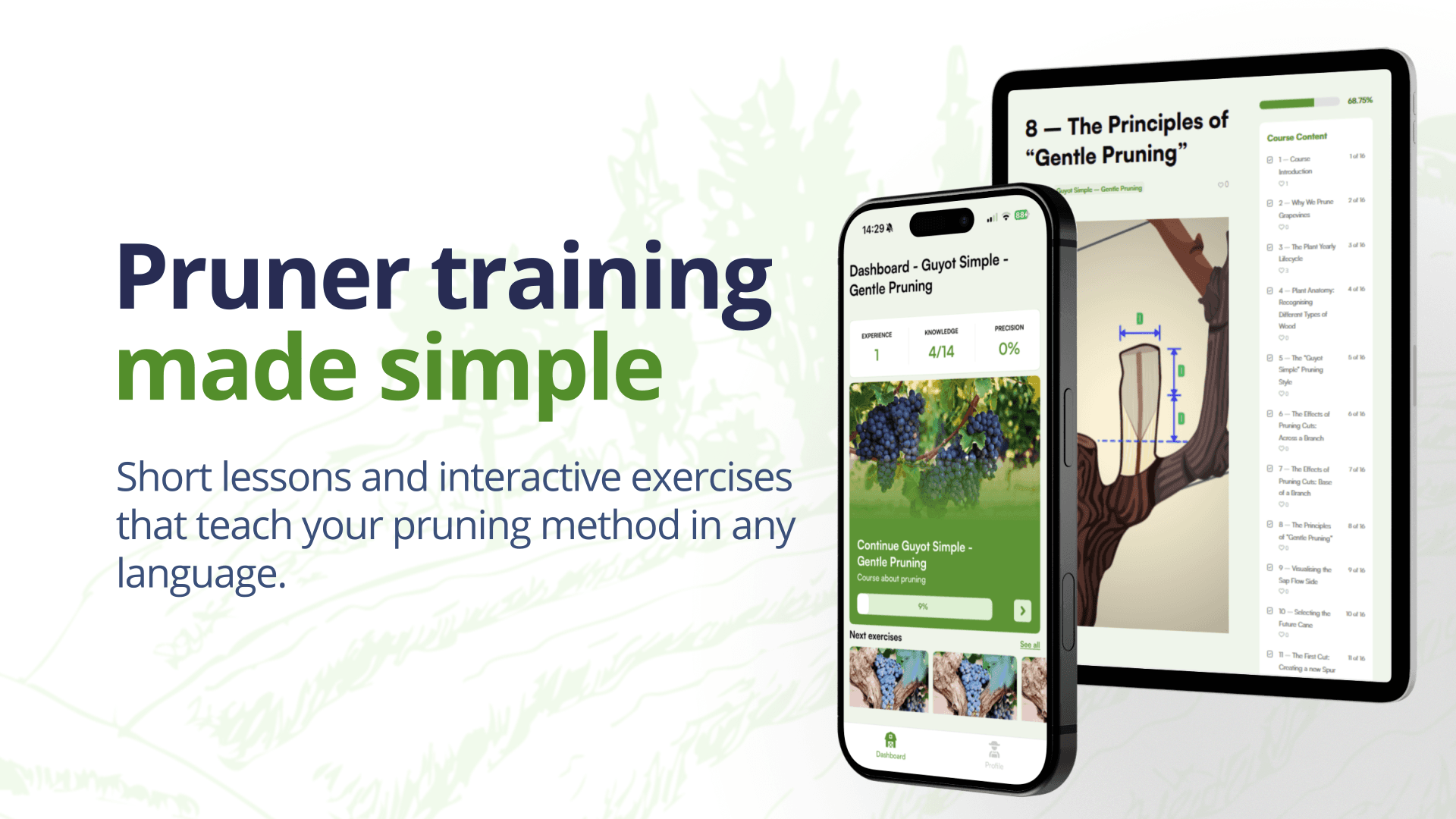
3D2cut SA offers comprehensive digital vine pruning training solutions designed to improve vineyard health and productivity. Co-founded with Simonit & Sirch, the platform provides short video lessons and interactive exercises, including pruning cut simulations, to teach various pruning methods in multiple languages. It also features manager dashboards for tracking progress and an innovative AI/AR pruning guidance system, which uses augmented reality glasses to suggest optimal cut zones. This tool addresses challenges like inconsistent pruning quality, high training burdens for new crews, and the increasing complexity of modern viticulture, making expert knowledge accessible and repeatable.
mattersim
MatterSim is a deep learning atomistic model developed by Microsoft, designed for simulating materials across a wide range of elements, temperatures, and pressures. It enables researchers and scientists to predict and analyze material behavior using advanced deep learning techniques. The tool offers two pre-trained models, MatterSim-v1.0.0-1M and MatterSim-v1.0.0-5M, based on the M3GNet architecture, with the larger version providing higher accuracy. Users can install MatterSim via PyPI or from source, and it supports finetuning on custom datasets. While primarily for bulk materials, it can be fine-tuned for specific applications like surfaces or interfaces.
matrixcalc
matrixcalc is an open-source GitHub repository hosting the materials for the MIT IAP short course, "Matrix Calculus for Machine Learning and Beyond." Taught by Professors Alan Edelman and Steven G. Johnson, this resource extends traditional calculus to matrix functions and arbitrary vector spaces, crucial for modern applications like machine learning and large-scale optimization. It covers topics such as derivatives as linear operators, multidimensional chain rules, automatic differentiation, and adjoint methods. The course emphasizes matrices as holistic objects and includes practical aspects like numerical computations using the Julia language, making it a valuable resource for those looking to deepen their understanding of advanced calculus in a computational context.
MathsDL-spring18
MathsDL-spring18 is an open-source repository offering comprehensive materials for the 'Mathematics of Deep Learning' topics course, taught at NYU in Spring 2018. It provides detailed logistics, instructor information, and a full syllabus covering geometric aspects of deep learning, optimization, and generalization. The repository includes lecture slides, references, and outlines for parallel curricula focusing on topics like Dynamic Programming, Policy Learning, and Monte-Carlo Tree Search, with specific readings and questions for each session. This resource is invaluable for students and researchers interested in the theoretical and mathematical foundations of deep learning, offering a structured approach to complex concepts and open problems in the field.

Entalpic
Entalpic is an AI-driven platform designed to accelerate chemistry and materials research and development, focusing on surface-driven industrial processes. It leverages cutting-edge AI, quantum modeling, and atomistic simulations to discover new materials and chemistry, enabling more sustainable industrial processes. The platform integrates multimodal datasets, including quantum simulations, scientific literature, patents, and experimental data, to power its predictive and generative models. Entalpic's technology includes a high-throughput discovery engine for screening chemical spaces, process modeling for simulating material behavior under manufacturing conditions, and a robust data curation system. It applies AI and atomic-scale modeling to solve industrial challenges in semiconductors, batteries, catalysis, and advanced materials.
Ovis2.5 9B
Ovis2.5 9B is an advanced AI chatbot designed for high-accuracy vision and reasoning, capable of handling complex tasks. Users can upload an image or a short video and then type a question or instruction. The model will analyze the visual content to generate a detailed text response. This includes explaining visual elements, performing calculations based on the content, or describing what it sees. It is particularly suited for scenarios requiring deep understanding and interpretation of visual data, making it a powerful tool for various analytical and descriptive applications.
MachineLearningNote
MachineLearningNote is an open-source GitHub repository dedicated to providing comprehensive notes and practical code examples for various machine learning algorithms. Primarily utilizing the Sklearn library in Python, this resource covers a wide array of topics including Logistic Regression, Decision Trees, K-Nearest Neighbors, Naive Bayes, K-Means & DBSCAN, Ensemble Learning, One-Class SVM, PCA, LDA, EM (GMM), SVM, XGBoost, Isolation Forest, Random Forest, LOF, and SVD. Each algorithm is accompanied by detailed explanations and code implementations, often linking to external blog posts for deeper understanding. It serves as an excellent reference for students and practitioners looking to enhance their knowledge and practical skills in machine learning with Python and Sklearn.
Paligemma Doc
Paligemma Doc is an AI tool designed for comprehensive document understanding. Users can upload various image types, including documents, infographics, diagrams, and images containing text, and then pose questions to receive detailed answers. This functionality makes it suitable for extracting information, analyzing content, and gaining insights from visual data. The tool leverages the power of PaliGemma for its document understanding capabilities, offering a versatile solution for tasks that involve interpreting and querying information embedded within images.
ml-glossary
ml-glossary is an open-source, community-maintained machine learning glossary designed to provide clear and accessible explanations of ML terms and concepts. It aims to present content in the most accessible way possible, with a heavy emphasis on visuals, interactive diagrams, code snippets (Python/Numpy), and equations formatted with Latex. The project encourages contributions from the community, allowing users to submit pull requests or raise issues to correct errors or add new content. It also provides a style guide for contributions, ensuring consistency and quality across entries. The glossary is a valuable resource for anyone looking to understand or contribute to machine learning knowledge.
ClothingGAN
ClothingGAN is an AI tool hosted on Hugging Face Spaces, designed for generating images of clothing items. This tool can be utilized for various applications, including fashion design prototyping, where designers can visualize new clothing patterns and ideas. It also serves as a valuable resource for graphic designers looking to create unique assets. Furthermore, ClothingGAN is applicable in AI research, enabling the generation of synthetic clothing images for training and experimentation. The tool operates under a Creative Commons license, making it accessible for non-commercial use.
Clustering With Sklearn
Clustering With Sklearn is an AI tool hosted on Hugging Face Spaces, designed to demonstrate various clustering algorithms available within the scikit-learn library. This tool provides an interactive platform for users to explore and visualize how different clustering techniques work. It is an invaluable educational resource for anyone looking to deepen their understanding of machine learning concepts, particularly in the domain of unsupervised learning. Data scientists, machine learning engineers, and students can utilize this space to experiment with algorithms, observe their behavior on datasets, and gain practical insights into data partitioning and pattern recognition. The tool aims to make complex clustering methodologies more accessible and understandable through practical application.
🐍💨 Data Contamination Database
The 🐍💨 Data Contamination Database is a Hugging Face Space designed to help users identify and manage data contamination within datasets and models. This application provides functionalities to filter and view data specifically related to contamination. Users can input particular evaluation datasets and contaminated sources, and then select various options to exclude or analyze these issues. It serves as a crucial resource for AI researchers and data scientists aiming to ensure the integrity and reliability of their data, ultimately leading to more robust and accurate AI models. The tool is hosted on Hugging Face Spaces, making it accessible for a wide range of users.
Oxy 1 Small
Oxy 1 Small is a demo space for the oxy-1-small AI model, hosted on Hugging Face. This AI assistant is designed to generate uncensored responses, providing users with a platform to experiment with AI interactions without content restrictions. Users can input text and receive responses, with the ability to customize the creativity of the output through adjustable temperature settings. While currently paused, the space offers a glimpse into the model's capabilities for generating diverse and unrestricted AI-driven conversations. It serves as a valuable resource for developers and researchers interested in exploring the boundaries of AI language models.