
Coding & Development
Browsing page 325 of AI tools for Coding & Development. Sorted by confidence score — our independent quality rating.

Dog Identifier
Dog Identifier is an AI-powered mobile application designed to enhance the experience of dog owners and enthusiasts. It utilizes advanced AI, trained on thousands of dog images, to accurately identify purebred and mixed-breed dogs from photos. Beyond breed identification, the app includes a 'Dog Voice Translator' (Beta) feature that analyzes dog vocalizations to interpret their mood, such as 'excited' or 'anxious'. An intelligent assistant called 'Diffy AI' is also integrated, providing answers to questions about dog behavior, nutrition, and health, even supporting image-based queries. The app fosters a community through its 'Dog Feed' feature, allowing users to share photos, identification results, and connect with other dog lovers globally. It is available on both Android and iOS devices.
catalyst
Catalyst is a high-performance C# Natural Language Processing (NLP) library inspired by spaCy's design, offering a robust solution for developers working with .NET. It provides pre-trained models, out-of-the-box support for training word and document embeddings, and flexible entity recognition models. Key features include non-destructive tokenization, efficient RegEx-free processing at over 1M tokens/s, and cross-platform compatibility across Windows, Linux, macOS, and ARM. Catalyst also supports part-of-speech tagging, language detection, and efficient binary serialization. Developers can leverage pre-built models for various language packages and easily integrate them via NuGet, with lazy loading from disk or an online repository.

Lumie: AI Reading Tutor
Lumie is an affordable AI reading tutor designed to help children in grades K-5 learn to read and enjoy the process. It leverages artificial intelligence to craft personalized stories around a child's favorite interests, such as Minecraft or Spidey, and then adapts the reading level as they progress. The app provides daily 10-minute lessons, with most families seeing measurable improvement in just two weeks. Lumie also features an AI reading buddy that reads alongside the child, assists with difficult words, and celebrates their achievements, making reading feel like play. Built by alumni from leading educational institutions, Lumie aims to address the national reading crisis by making learning engaging and accessible.
AI Coder Buddy
AI Coder Buddy is an AI-powered coding assistant designed to significantly enhance developer productivity. While specific features are not detailed on the current landing page, the tool aims to provide developers with efficient access to code examples and solutions. It is expected to support a wide array of programming languages and frameworks, helping developers to streamline their workflow, solve coding problems more efficiently, and focus on higher-level tasks. The platform is currently in a 'Launching Soon' phase, indicating future availability for users seeking to leverage AI in their coding endeavors.
Codebuff
Codebuff is an AI-powered coding assistant designed to integrate directly into your terminal, enabling developers to interact with their codebase and execute commands using natural language. It distinguishes itself by indexing and understanding entire codebases within seconds, allowing for deep project insights and context-aware suggestions that other AI tools often miss. This comprehensive understanding facilitates surgical code edits, ensuring changes respect existing structure and style. Codebuff offers instant solutions tailored to your project's context and boasts zero setup hurdles, working with any tech stack. It provides a free tier with monthly credits and usage-based pricing, making it accessible for individual developers while also offering enterprise plans.
kur
Kur is an open-source system designed to simplify the development and application of state-of-the-art deep learning models. It caters to both novices and experienced machine learning practitioners by allowing models to be described using easily understandable specification files, eliminating the need for extensive coding. The tool supports popular deep learning frameworks such as Theano, TensorFlow, and PyTorch, and provides out-of-the-box multi-GPU support for efficient training. Users can quickly explore different model versions using the Jinja2 templating engine. Kur also offers a friendly and extensible API for advanced deep learning architectures and workflows, making it a versatile solution for building sophisticated AI models.
text-summarization-tensorflow
text-summarization-tensorflow is an open-source project providing a TensorFlow implementation of text summarization. It utilizes a seq2seq library with an encoder-decoder model, incorporating an attention mechanism for improved performance. The tool initializes word embeddings using Glove pre-trained vectors and employs LSTM cells for both encoding and decoding processes. It supports training with custom datasets and offers options for configuring hyperparameters such as network size, depth, beam width, and learning rate. Users can also test the model with pre-trained weights and evaluate performance using ROUGE metrics. This tool is ideal for researchers and students looking to understand and experiment with text summarization techniques.
ROK Solution
ROK Solution is a comprehensive hyperautomation platform designed to revolutionize business processes by combining workflow, BPM, RPA, AI, and no-code capabilities. It enables organizations to automate processes without extensive coding, accelerating application creation and streamlining operations. The platform emphasizes balancing agility with governance and cybersecurity, offering features like automated org chart generation, Identity Governance & Administration (IGA) for secure access, and built-in Generative AI for application creation. ROK Solution aims to reduce operational costs, improve customer satisfaction, and enhance security, making it suitable for digital transformation in both business and governmental organizations that require stringent security and compliance.
Upscale-A-Video
Upscale-A-Video is an open-source, diffusion-based model designed for real-world video super-resolution, enhancing video quality with temporal consistency. Developed by S-Lab at Nanyang Technological University and presented at CVPR 2024, this tool takes low-resolution videos and text prompts as inputs to generate high-resolution outputs. It provides inference code for various video types, including AIGC videos, old movies, and animations. Users can also address color discrepancies with options like "AdaIn" or "Wavelet" color fixes. The project includes the YouHQ dataset, comprising over 38,000 videos for training and 40 for evaluation, making it a valuable resource for researchers and developers in the video processing domain.
gptel
gptel is a versatile Large Language Model chat client designed for Emacs, offering seamless integration with various LLM providers and backends. It functions within any Emacs buffer, enabling users to interact with LLMs for tasks like code rewriting, content generation, and more. Key features include support for multiple independent conversations, tool-use for agentic capabilities, and multi-modal input. Users can save and resume chat sessions, inspect and modify queries before sending, and leverage Model Context Protocol (MCP) integration. gptel supports a wide array of LLM services, including OpenAI, Anthropic, Gemini, Ollama, and many others, making it a flexible solution for developers and technical users who prefer to stay within their Emacs environment.

Mojo AI
Mojo AI offers an AI-powered safety management platform designed for the construction and oil & gas sectors. Its flagship product, Safety Mojo, streamlines safety processes by unifying risk, compliance, and frontline data across projects, trades, and crews. Key features include AI-scored Pre-Task Plans (PTP/JSA) for quality and risk coverage, conversational AI tools like Ask Mojo, and multilingual support. The platform automatically generates OSHA 300/301/300A logs, TRIR, DART, and lost-time reports from submitted forms and field data. It also provides real-time dashboards for visibility across sites, allowing users to prioritize audits and identify high-risk work. Mojo AI helps meet OCIP data requirements and integrates with other software via API.
Kane AI
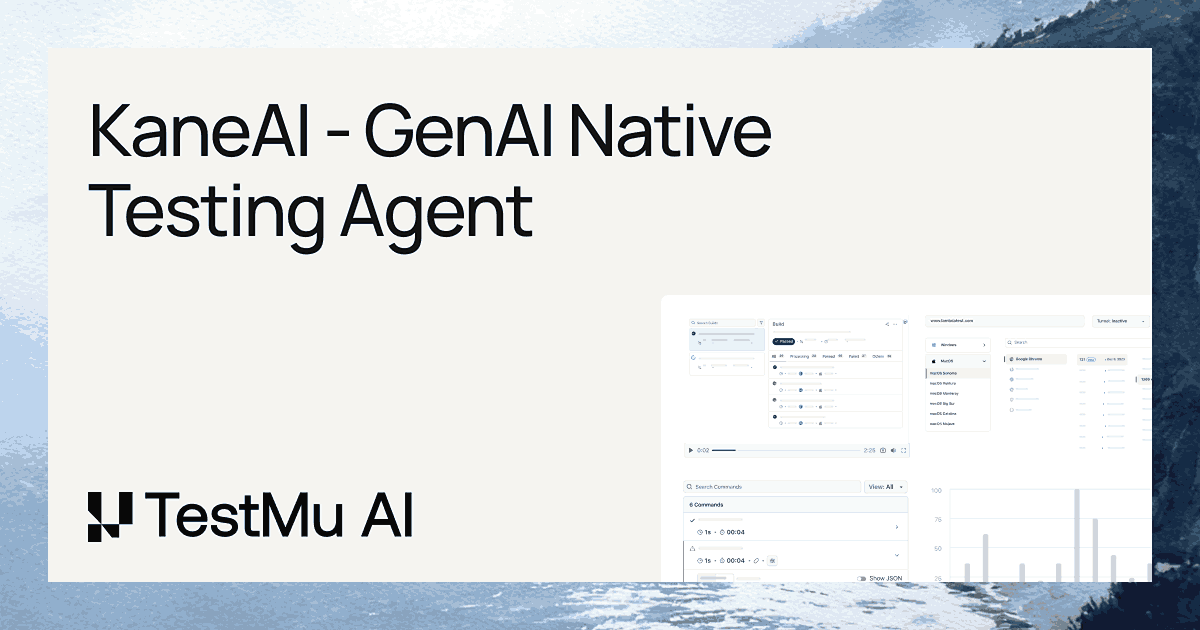
Kane AI, developed by TestMu AI (formerly LambdaTest), is a pioneering GenAI-native testing agent designed for high-speed Quality Engineering teams. It empowers users to plan, author, and evolve end-to-end tests using natural language, eliminating the need for complex coding. The tool supports testing across various layers including databases, APIs, and accessibility, and can generate structured test cases from diverse inputs like text, JIRA tickets, PRDs, PDFs, images, audio, and spreadsheets. Kane AI also features real-time network checks, pixel-perfect validation, and built-in accessibility testing. Its 'human in the loop' functionality allows for manual interaction recording and plan approval, ensuring AI-created tests align with user intent. It also offers intelligent and modular test building, adapting to different environments and real-world conditions.
project_news_alan_ai
Project News Alan AI is an open-source code repository that showcases how to build a conversational voice-controlled React News Application using Alan AI. Alan AI is a powerful speech recognition software designed to integrate voice capabilities into various applications, enabling users to control app functionalities entirely through voice commands. This project serves as a practical tutorial, guiding developers through the process of integrating Alan AI into a React application to create interactive, voice-enabled experiences. It highlights the ease of integration and the potential for developing custom voice-controlled applications, making it a valuable resource for those looking to add advanced speech recognition features to their projects.

Explorable World as Agent Skill
Explorable World as Agent Skill, a concept introduced in LocalGPT Gen v0.3.2, revolutionizes how AI agents interact with 3D environments. It allows for the treatment of entire 3D worlds as reusable skills that agents can save, load, and share. These 'skill directories' encapsulate all essential components of a world, including scene geometry with entities, meshes, and transforms, as well as behaviors like animations (orbit, spin, bob, path following) and audio configurations such as ambient soundscapes and spatial emitters. This approach aims to streamline the software supply chain from intent to result, drawing inspiration from projects like blender-mcp and bevy_brp. It positions LocalGPT Gen alongside other explorable world tools like Genie 3, SIMA 2, Marble, Intangible, and Artcraft, fostering an ecosystem where agent memory and orchestration can continuously improve.
DVC AI
DVC AI, or Data Version Control, is an open-source system designed to bring software engineering best practices to data science and machine learning workflows. It offers a Git-like experience for managing data, models, and experiments, enabling teams to version and track large datasets and model artifacts. DVC AI integrates with Git for local workflows and also offers an enterprise solution, lakeFS, for highly scalable data version control in complex AI operations and big data environments. It supports various remote storage options like Amazon S3, Azure Blob Storage, Google Cloud Storage, and more. DVC AI helps users manage data pipelines, track metrics and parameters, and conduct experiment management, ensuring reproducibility and collaboration in AI/ML projects.
OmarCMS
OmarCMS is an AI-native blogging platform designed for agents and developers who prefer a git-based workflow for content management. It enables users to write blog posts in markdown files, commit them to GitHub, and auto-deploy them to their site. The platform emphasizes simplicity and efficiency, operating without an admin panel, database, or visual editors. Key features include static site generation with Astro for blazing-fast performance, WCAG AA compliance for accessibility, and robust SEO optimization with JSON-LD, Open Graph tags, RSS feed, and sitemap. OmarCMS is open-source, MIT licensed, and built to be completely free to host, making it an ideal solution for those seeking full control and a streamlined publishing process.

Flashback
Flashback empowers businesses to build transformative applications faster and smarter through a unified multi-cloud platform. It offers an Enterprise AI Gateway for secure access and policy control for AI usage, supporting OpenAI, Anthropic AI, AWS Bedrock, and Google VertexAI. This gateway enables pre-request policy enforcement, data anonymization, compliance controls, and cost visibility. Additionally, Flashback provides a Multi-Cloud Storage Gateway to empower storage with a multi-cloud strategy, allowing users to connect public and private S3-compatible clouds, optimize storage costs, and manage redundancy and recovery from a single control panel. The platform emphasizes governance, privacy, and observability for cloud operations.
super-gradients
Super-gradients is an open-source training library designed to simplify the process of building, training, and fine-tuning state-of-the-art computer vision models. It provides ready-to-deploy pre-trained models, including the high-performance YOLO-NAS and YOLO-NAS-POSE architectures, which outperform other YOLO versions in accuracy and speed. The library supports various computer vision tasks such as classification, semantic segmentation, object detection, and pose estimation. Users can easily load and fine-tune models with validated hyper-parameters, and all models are production-ready, compatible with deployment tools like TensorRT and OpenVINO. Super-gradients also offers advanced features like Quantization Aware Training (QAT) and Knowledge Distillation, along with support for Distributed Data Parallel (DDP) for efficient multi-GPU training.
uis-rnn
uis-rnn is a Python library for the Unbounded Interleaved-State Recurrent Neural Network (UIS-RNN) algorithm, primarily used for fully supervised speaker diarization. This algorithm excels at segmenting and clustering sequential data by learning from examples. The library provides core APIs for model construction, training, and prediction, allowing users to fit models with observation sequences and ground truth cluster IDs. It supports both list-based and concatenated sequence inputs, with careful handling of cluster ID uniqueness. The tool is particularly useful for tasks like identifying who spoke when in audio recordings, leveraging d-vector embeddings as observations. It also offers guidelines for training on large datasets by calling the fit() function multiple times with appropriately sized inputs.

JobChat: AI Chat for Easy Job
JobFight is a rapidly growing platform, founded in 2023, dedicated to supporting job seekers and companies in Japan. It aims to update industry structures and mechanisms by leveraging advanced AI for efficient candidate-job matching and app development. The platform also manages a large student community of over 200,000 members and engages in media activities. JobFight emphasizes problem-solving through structural improvements rather than focusing on individual errors, striving to advance society. It offers services like AI-powered site and app development, and utilizes social media for advertising, making it a comprehensive resource for career progression and talent acquisition.
WebLaTex
WebLaTex offers a comprehensive alternative to Overleaf, designed for students, lecturers, and professors to create journals, research papers, and resumes. It integrates the familiar VSCode environment with web and Git capabilities, allowing users to commit changes, roll back to older versions, and collaborate seamlessly. Key features include GitHub Copilot for intelligent code and sentence completion, built-in Grammarly or LanguageTool for grammar and spell checking, and live collaboration support. The platform is built on GitHub Codespaces and Dev containers, ensuring quick setup and access. Users can easily manage their LaTeX projects, generate PDFs automatically upon saving, and customize various configurations, making it a powerful tool for academic and technical document creation.
nerd-dictation
nerd-dictation is a simple, hackable, and offline speech-to-text utility designed for Desktop Linux. It leverages the VOSK-API for accurate transcription without requiring an internet connection. The tool is a single-file Python script with minimal dependencies, making it easy to set up and use. Key features include optional conversion of numbers to digits, a timeout function for automatic speech ending, and configurable output types (simulating keystrokes or printing to standard output). Users can customize text manipulation through Python scripts and bind begin/end/cancel commands to shortcut keys for efficient workflow. It also supports suspend/resume functionality to manage resource usage, especially with larger language models.
char-rnn
char-rnn is an open-source implementation of multi-layer Recurrent Neural Networks (RNN, LSTM, and GRU) designed for character-level language models. This Torch-based tool allows users to train a neural network on a text file, enabling it to learn to predict the next character in a sequence. Once trained, the RNN can generate new text that mimics the style and content of the original training data. It offers features like multi-layer support, model checkpointing, and GPU acceleration for efficiency. While this specific codebase is older, it laid the groundwork for more optimized versions like torch-rnn, making it a foundational resource for understanding character-level language modeling.
cockpit-tools
cockpit-tools is a universal AI IDE account management tool designed to streamline the workflow for developers using multiple AI coding assistants. It supports a wide array of platforms including Antigravity, Codex, GitHub Copilot, Windsurf, Kiro, Cursor, Gemini-cli, CodeBuddy, Qoder, Trae, and Zed. Key features include one-click account switching, real-time quota monitoring, automated wake-up tasks, and the ability to run multiple instances of the same AI IDE concurrently with different accounts. This allows developers to efficiently manage resources, switch between projects, and optimize their usage across various AI tools without manual login/logout processes. The tool also provides device fingerprint management to mitigate risk and supports 18 languages for a global user base.