
Coding & Development
Browsing page 326 of AI tools for Coding & Development. Sorted by confidence score — our independent quality rating.

claudish
Claudish (Claude-ish) is a command-line interface (CLI) tool designed to enhance the flexibility of Claude Code by enabling its use with a wide array of AI models. It functions by proxying requests through a local Anthropic API-compatible server, allowing users to leverage their existing AI subscriptions from providers like Anthropic Max, Gemini Advanced, ChatGPT Plus/Codex, Kimi, GLM, and OllamaCloud. Additionally, it supports over 580 models via OpenRouter and various local models for complete privacy. Claudish emphasizes cost control by utilizing existing API keys and offers features like multi-provider support, native auto-detection, direct API access, and a 100% offline option for sensitive code.
talking-head-anime-3-demo
talking-head-anime-3-demo provides demo programs for animating anime characters using a single image. This open-source project allows users to manipulate a character's facial expression, head rotation, body rotation, and chest expansion through a graphical user interface. Additionally, it supports transferring real-time facial motion from an iOS device to an anime character. The tool requires a powerful Nvidia GPU and specific software environments (Python, PyTorch, etc.) to run. It's designed for users interested in AI-driven animation, offering different neural network variants that balance size, speed, and accuracy. The project is released under an MIT license for the code and Creative Commons Attribution 4.0 International License for the models.
YubHub
YubHub is an AI-powered platform designed to automate the scraping and enrichment of live job listings directly from company career pages. It provides a comprehensive solution for job boards, programmatic buyers, and recruitment tooling by offering structured data on salary, skills, location, and work arrangements. The platform updates daily, ensuring fresh inventory and eliminating the need for manual intervention. YubHub offers various plans, including a free tier for testing, and supports XML and JSON feeds, making it highly adaptable for integration into existing systems. It's built for the AI era of hiring, providing valuable insights for job seekers, developers, and businesses looking to analyze hiring trends or build custom job feeds.
keras-cv
KerasCV is a comprehensive open-source library offering modular computer vision components designed for seamless integration with Keras 3, supporting TensorFlow, JAX, and PyTorch backends. It provides a rich collection of models, layers, metrics, and callbacks for common computer vision tasks such as data augmentation, classification, object detection, segmentation, and image generation. Developers can leverage KerasCV to quickly assemble production-grade, state-of-the-art training and inference pipelines. The library ensures the same level of polish and backward compatibility as the core Keras API, maintained by the Keras team. While KerasCV is transitioning to KerasHub for new vision model development, existing functionalities remain robust and supported.
nilearn
Nilearn is an open-source Python library designed for machine learning in neuroimaging, offering approachable and versatile analyses of brain volumes and surfaces. It provides a comprehensive suite of statistical and machine-learning tools, accompanied by instructive documentation and a supportive community. The library facilitates general linear model (GLM) based analysis and integrates with the scikit-learn Python toolbox for advanced multivariate statistics. This enables applications such as predictive modeling, classification, decoding, and connectivity analysis within neuroimaging research. Nilearn is ideal for researchers and data scientists working with brain imaging data, providing the necessary tools to implement complex analytical workflows.
deepmd-kit
DeePMD-kit is a Python/C++ package designed to facilitate the creation of deep learning-based models for interatomic potential energy and force fields, and to perform molecular dynamics simulations. It addresses the accuracy-versus-efficiency dilemma in molecular simulations by leveraging deep learning. The package is highly modularized and interfaces with popular deep learning frameworks like TensorFlow, PyTorch, JAX, and Paddle, as well as high-performance classical and quantum MD packages such as LAMMPS, i-PI, and GROMACS. It implements the Deep Potential series models, which have been successfully applied to various systems, including organic molecules, metals, and semiconductors. DeePMD-kit also supports MPI and GPU for efficient parallel and distributed computing, making it suitable for complex scientific research.
skypilot
SkyPilot is a comprehensive system designed to run, manage, and scale AI workloads across diverse infrastructure environments. It offers a simple interface for AI teams to execute jobs on any infrastructure, including Kubernetes, Slurm, over 20 cloud providers, and on-premise setups. For infrastructure teams, SkyPilot acts as a unified control plane, enabling advanced scheduling, scaling, and orchestration of AI compute resources. Key features include flexible provisioning of GPUs, TPUs, and CPUs with smart failover, multi-cloud and multi-cluster support, and intelligent scheduling to maximize GPU fleet utilization through autostop and binpacking. It supports existing GPU, TPU, and CPU workloads without requiring code changes, making it a versatile solution for accelerating AI/ML velocity and optimizing resource management.
llm-foundry
llm-foundry is a comprehensive open-source repository offering code for the entire lifecycle of Large Language Models (LLMs), from training and finetuning to evaluation and deployment. It is specifically designed to integrate with Composer and the MosaicML platform, providing an efficient and flexible environment for rapid experimentation. The codebase supports various LLM workloads, including data preparation, training HuggingFace and MPT models from 125M to 70B parameters, and benchmarking training throughput and MFU. It also facilitates inference by converting models to HuggingFace or ONNX formats, generating responses, and evaluating LLMs on academic or custom in-context-learning tasks. The repository includes support for DBRX and MPT models, with detailed instructions for local use and community contributions.
simple_dqn
simple_dqn is an open-source deep Q-learning agent developed to replicate the results from DeepMind's paper "Human-level control through deep reinforcement learning." While the repository is noted as outdated with better codebases available, it serves as a foundational tool for understanding the basics of deep Q-learning. It is designed for simplicity, speed, and extensibility, utilizing the ALE native Python interface and supporting training and testing with OpenAI Gym. The project also integrates with the Neon deep learning library for fast convolutions and minimizes array conversions for efficient minibatch sampling. It includes scripts for training, testing, visualizing filters, and recording gameplay videos.
Nilo
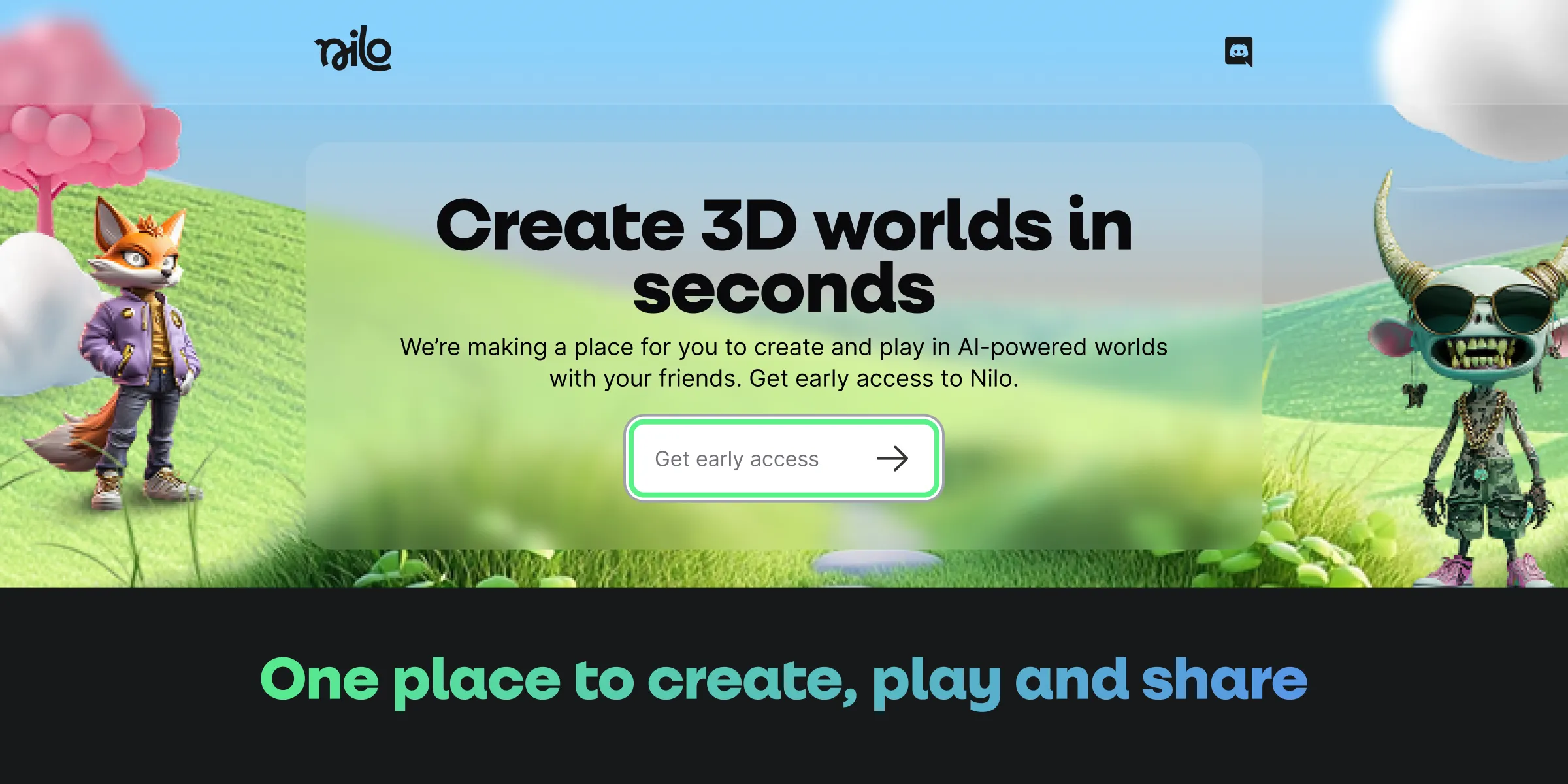
Nilo is a comprehensive game development tool designed to streamline the creation of 3D assets for Roblox. It enables users to generate models from sketches, images, or text prompts, and then refine details, optimize polycount, rig, and animate with ease. The platform supports the creation of custom Roblox-ready avatars and asset packs, allowing users to design entire environments or characters efficiently. Nilo operates entirely in the browser, eliminating the need for complex installations, and offers real-time collaborative playtesting with friends. Users can export their creations with a single click for direct upload to Roblox Studio, making it an accessible solution for both new and experienced builders looking to accelerate their game development workflow.
MM-EUREKA
MM-EUREKA is a cutting-edge project exploring the frontiers of multimodal reasoning through rule-based reinforcement learning. It introduces powerful models such as MM-Eureka-Qwen-7B and MM-Eureka-Qwen-32B, which significantly advance performance in multidisciplinary K12 and mathematical reasoning tasks. The project has iterated on model architecture, algorithms, and data, moving from InternVL to the more robust Qwen2.5-VL base models. Key improvements include enhanced online filtering, adaptive online rollout adjustment (ADORA), and novel RL algorithms like Clipped Policy Gradient Optimization with Policy Drift (CPGD). MM-EUREKA also open-sources a comprehensive pipeline, including self-collected MMK12 datasets, to foster further research and development in multimodal AI.
sshx
sshx offers a secure, web-based platform for sharing and collaborating on terminals. Users can invite others by sharing a unique browser link, enabling real-time collaboration with remote cursors and chat on a multiplayer infinite canvas. The tool is designed for speed and security, featuring end-to-end encryption to ensure data privacy, as the server never sees what is being typed. It supports cross-platform use with a command-line tool available for macOS, Linux, and Windows. sshx is ideal for teaching, debugging, or cloud access, allowing users to move and resize multiple terminals in any arrangement and see live presence of other participants. Its ultra-fast mesh networking connects users to the nearest distributed peer in a global network.
novel
Novel is an open-source, Notion-style WYSIWYG editor designed to streamline the writing process with AI-powered autocompletion. It allows users to create and edit content within a familiar and intuitive interface, similar to Notion. The tool integrates OpenAI for AI completions and is built on a modern tech stack including Next.js, Tiptap, and Vercel AI SDK. Novel is suitable for developers looking to integrate a powerful editor into their applications, as well as writers and content creators seeking an enhanced writing experience with intelligent suggestions.
TPVFormer
TPVFormer is an academic project offering a Tri-Perspective View (TPV) representation for vision-based 3D semantic occupancy prediction, serving as an alternative to Tesla's Occupancy Network for autonomous driving research. It addresses the limitations of traditional bird's-eye-view (BEV) representations by incorporating two additional perpendicular planes, allowing for a more fine-grained description of 3D scenes. The tool features a transformer-based TPV encoder (TPVFormer) to effectively obtain TPV features by aggregating image features. It demonstrates that camera inputs alone can achieve performance comparable to LiDAR-based methods on LiDAR segmentation tasks. The project also includes resources for semantic scene completion and comparisons with Tesla's Occupancy Network.

Alfred AI
Alfred AI is an intelligent API assistant designed to transform developer portals by automating workflows and accelerating API operations. It can generate integration code and data models in any language and framework, simplifying the integration process for customers and speeding up onboarding. Users can ask Alfred anything about their API using natural language, and it will instantly provide answers, discover endpoints, and understand API structures. This tool aims to reduce integration support requests by 15x and accelerate API integrations, discovery, and adoption by 10x. Alfred AI can be easily embedded into any developer portal with a single line of code and an OpenAPI Specification, making it a powerful addition for enhancing developer experience and boosting revenue.

JackChat AI
JackChat AI is an innovative iOS mobile application designed to facilitate voice-based interactions with advanced AI models. It provides a user-friendly push-to-talk interface, ensuring seamless and natural communication. This tool allows users to engage with AI hands-free, making it convenient for accessing AI assistance and information while on the go. The focus on voice interaction aims to provide a more intuitive and efficient way to leverage AI capabilities, moving beyond traditional text-based interfaces. It's built to offer quick and intuitive interaction for various AI-powered tasks.
EASYChatGPT
EASYChatGPT is an open-source desktop application project designed to facilitate developer access to ChatGPT. It provides a straightforward way for users to interact with ChatGPT's interface directly from their desktop environment, requiring only a personal API key. The project emphasizes ease of use, with a two-step setup process for installation and conversation initiation. It's particularly useful for developers who want to experiment with ChatGPT functionalities without needing to rely on web interfaces or complex setups. The tool currently supports single-turn conversations and requires users to replace the API key in the configuration file. It's important to note that this is a personal project and not an official OpenAI product.
sentencepiece
SentencePiece is an unsupervised text tokenizer and detokenizer primarily designed for Neural Network-based text generation systems where the vocabulary size is predetermined. It implements subword units such as byte-pair-encoding (BPE) and unigram language models, uniquely allowing direct training from raw sentences. This eliminates the need for language-specific pre-tokenization tools like Moses or MeCab, making it purely data-driven and language-independent. SentencePiece treats sentences as sequences of Unicode characters, including whitespace as a basic symbol, which ensures reversible tokenization and detokenization. It also supports subword regularization and BPE-dropout to enhance the robustness and accuracy of NMT models, and offers fast, lightweight segmentation with direct vocabulary ID generation.
audiocraft
AudioCraft is a comprehensive PyTorch library designed for deep learning research in audio generation. It provides both inference and training code for advanced AI generative models, including MusicGen for controllable text-to-music generation and AudioGen for text-to-sound. The library also integrates the state-of-the-art EnCodec audio compressor/tokenizer, Multi Band Diffusion for EnCodec-compatible decoding, and MAGNeT for non-autoregressive text-to-music/sound. Additionally, it offers AudioSeal for audio watermarking and JASCO for high-quality text-to-music conditioned on chords, melodies, and drum tracks, making it a powerful toolkit for researchers and developers in the audio AI domain.

Yesicon
Yesicon offers a comprehensive collection of open-source vector icons, featuring 223 icon sets with over 290,000 icons. Users can efficiently search across these icon sets in multiple languages, utilizing rich filtering options by type and style to find the perfect icon. The platform provides quick customization tools for adjusting icon colors and sizes, along with various code styles. Developers and designers can benefit from one-click copy and download functionalities, making it easy to integrate icons into their projects. Yesicon is licensed under an open-source model, allowing free download and use, and supports formats like SVG and PNG, as well as frameworks like React, Vue, Svelte, TailwindCSS, and UnoCSS.
SwanLab
SwanLab is an open-source, modern-design AI training tracking and visualization tool built for AI model training teams. It provides comprehensive features for experiment analysis, metric observation, and collaboration. Researchers can track key metrics, record hyperparameters, and visualize training processes through an intuitive UI, helping to identify issues and accelerate model iteration. SwanLab supports a wide range of data types including scalar metrics, images, audio, text, video, 3D point clouds, and biochemical molecules, along with various chart types like line, media, bar, and custom ECharts. It offers both cloud and self-hosted deployment options and integrates with over 50 mainstream frameworks, including PyTorch, Transformers, and Keras. Key functionalities include experiment comparison, multi-person collaboration, hardware monitoring, and an open API for extended capabilities.
Meshcapade
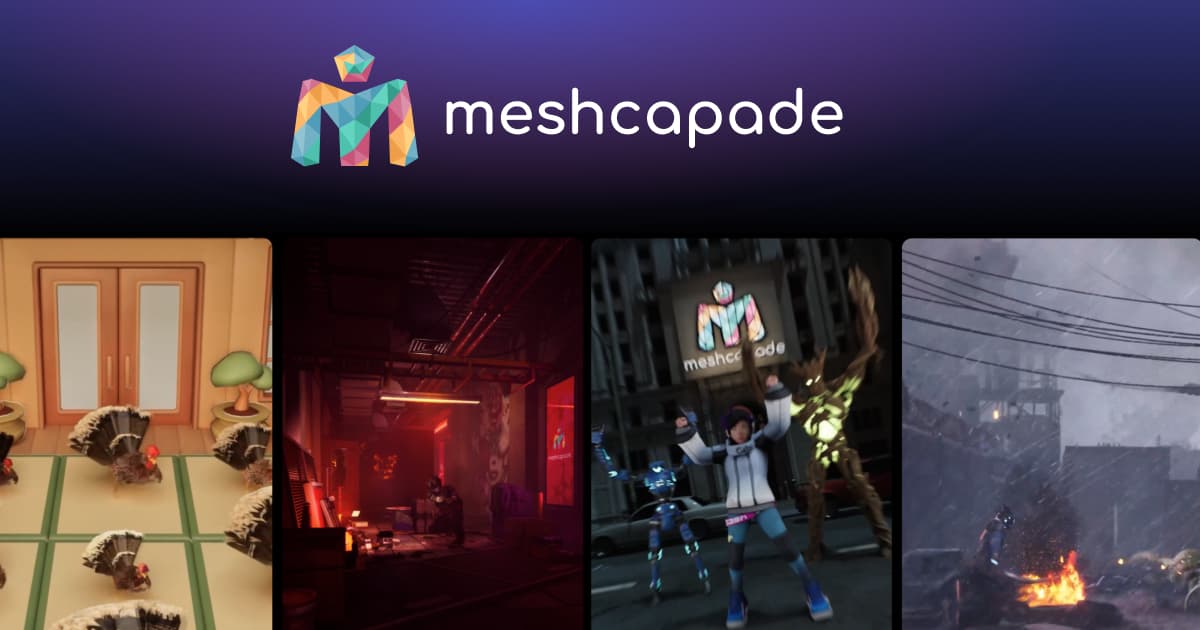
Meshcapade offers a comprehensive AI toolkit for markerless motion capture, motion generation, and human-understanding. It allows users to capture full body and hand movements with unmatched quality using any camera, from phones to professional setups, without the need for suits or markers. The platform supports various export formats like FBX and GLB, making it compatible with diverse workflows. Built on the SMPL foundation model, Meshcapade's technology adapts to industries such as gaming, fashion, and robotics, providing accurate 3D bodies and motion. It also offers features like realistic 3D hair estimation (coming soon) and is enterprise-proven, privacy-first, and EU/GDPR compliant.
REST API with Gradio and Huggingface Spaces
REST API with Gradio and Huggingface Spaces provides a platform for developers to create and deploy REST APIs, particularly useful for machine learning applications. Hosted on Hugging Face Spaces, this tool simplifies the process of building web interfaces for AI models. It is designed for prototyping AI applications, allowing users to quickly set up an API endpoint for their models. The platform leverages Gradio for creating user-friendly web interfaces, making it accessible for developers to share and test their AI projects.
eli5
eli5 is a Python package designed to help debug and inspect machine learning classifiers, providing explanations for their predictions. It supports a wide range of machine learning frameworks, including scikit-learn, Keras (for Grad-CAM visualizations), xgboost, LightGBM, CatBoost, and lightning. The library can explain weights and predictions of linear classifiers, print decision trees, show feature importances, and debug scikit-learn pipelines. Additionally, eli5 implements algorithms for inspecting black-box models, such as TextExplainer for LIME-based explanations and permutation importance for feature importances. Explanations can be formatted for console display, HTML embedding, pandas DataFrames, or JSON for custom rendering.