
Coding & Development
Browsing page 323 of AI tools for Coding & Development. Sorted by confidence score — our independent quality rating.

AutonomousDrivingCookbook
The AutonomousDrivingCookbook, developed by Microsoft Garage, offers a collection of scenarios, tutorials, and demos for autonomous driving. It aims to lower the barrier to entry for individuals interested in this rapidly evolving field. The cookbook provides resources for beginners, researchers, and industry experts, with tutorials presented as Jupyter notebooks for easy access and minimal setup. These tutorials leverage popular open-source tools like Keras and TensorFlow, alongside Microsoft technologies such as AirSim and Azure, focusing on content and learning rather than specific tool dependencies. It's a work in progress, with ongoing additions based on user feedback and collaborator availability.
Supadash
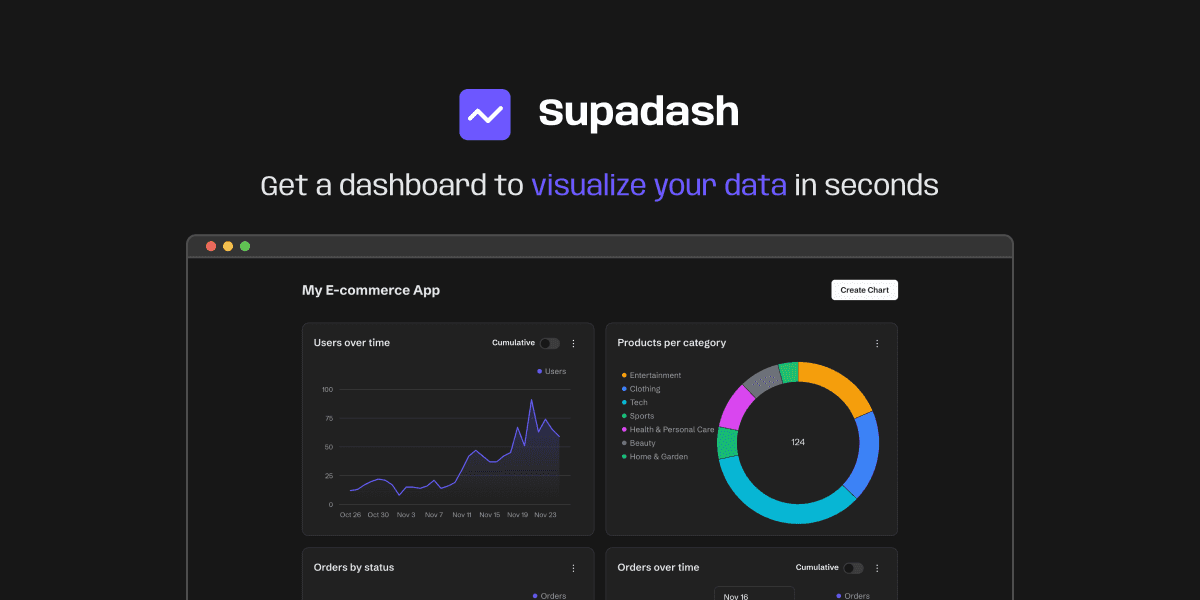
Supadash allows users to connect their database and instantly generate AI-powered charts and dashboards to visualize their data and analytics. This no-code solution eliminates the need for periodically running SQL queries to track metrics, as Supadash automatically creates time series charts and other visualizations. It transforms raw database tables into insightful and visually appealing dashboards in seconds, making data analysis accessible and efficient for users who need to understand their data better without extensive technical knowledge.
MockingBird
MockingBird is an open-source voice cloning tool designed for real-time speech generation. It allows users to clone a voice in approximately 5 seconds and generate arbitrary speech. The tool supports Chinese Mandarin and has been tested with multiple datasets, including aidatatang_200zh, magicdata, and aishell3. It is compatible with Windows, Linux, and even M1 macOS, offering flexibility for various environments. MockingBird leverages PyTorch and provides options for training custom models for encoders, synthesizers, and vocoders, or utilizing community-shared pretrained models. It offers a web server, a toolbox, and a command-line interface for generating voices.
SpeechKITT
SpeechKITT offers a flexible graphical user interface (GUI) designed to streamline the integration of speech recognition capabilities into websites. It provides a user-friendly interface for starting, stopping, and monitoring the status of speech recognition. SpeechKITT is compatible with different speech recognition engines, including direct webkitSpeechRecognition usage and libraries like annyang. Developers can easily guide users on voice interaction, provide instructions, and even facilitate natural conversations with follow-up questions. The tool is highly customizable, offering multiple themes and instructions for creating custom designs, making it adaptable to various web application needs.
meldCX
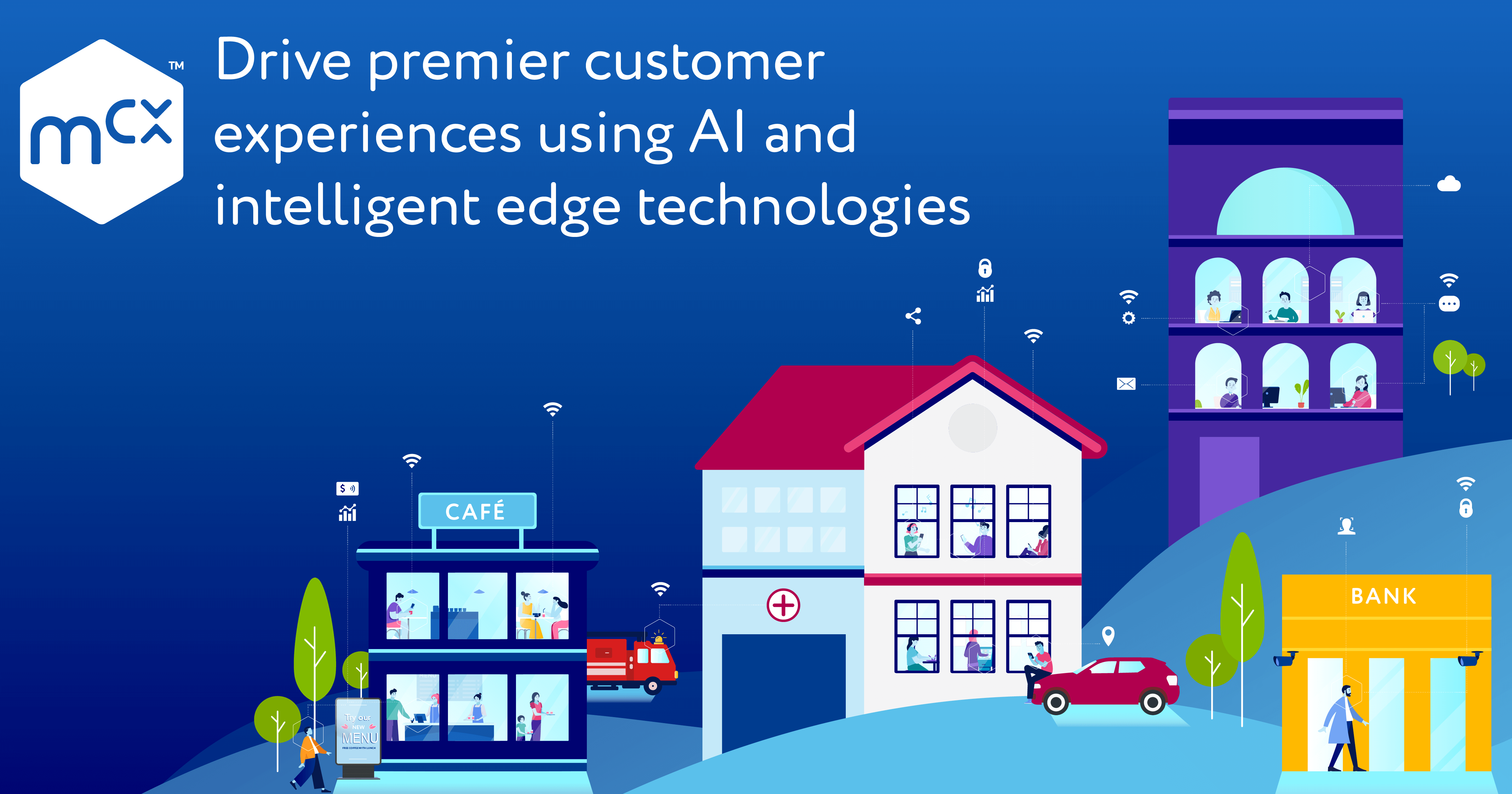
meldCX is a comprehensive platform designed to drive premier customer experiences through AI and intelligent edge technologies. It offers solutions for deploying commercial devices up to 6x faster and provides a simple, scalable platform for easy device and app management. The platform features products like meldCX Core for building applications, VIANA for measuring physical and digital interactions, and COATRO for smart, adaptive signage. meldCX enables businesses to consume machine vision and AI data without needing developers, and offers an emulator for building apps in a near-native environment. It caters to various industries including retail, hospitality, education, government, healthcare, and finance, providing solutions for visual experiences, interactive self-service, machine vision & AI, custom kiosks, and advertising.
infiniteGPT
infiniteGPT is a Python script designed to streamline interactions with the OpenAI API, enabling users to process texts of unlimited size. This tool eliminates the common frustration of repeatedly copying and pasting large chunks of text into AI models like GPT-3.5-turbo or GPT-4. By leveraging multithreading, infiniteGPT ensures efficient handling of extensive inputs, making it ideal for tasks requiring comprehensive text analysis or generation without manual intervention. It requires users to bring their own OpenAI API keys and is a single Python script, emphasizing ease of use for developers and technical users looking to integrate advanced AI capabilities into their workflows.

Tag Companion
Tag Companion streamlines Google Tag Manager (GTM) implementation, transforming hours of manual setup and debugging into minutes. Users can visually select elements on their website, configure GA4 event names and parameters through a point-and-click interface, and then export a complete GTM container file. This eliminates the need for complex CSS selectors, developer tickets, or direct code changes on the website. It supports tracking various elements like button clicks, form submissions, and full GA4 eCommerce events, even for forms that submit without page reloads. The tool integrates seamlessly with GTM, allowing users to import configurations and publish, ensuring tracking runs independently through GTM without ongoing dependencies on Tag Companion.
Review-Gate
Review-Gate is a specialized tool designed to integrate with the Cursor IDE, significantly enhancing the code review process. It provides interactive AI assistance, allowing developers to engage with the AI through various modalities including text, voice, and image uploads. This multi-modal interaction facilitates a more dynamic and efficient review cycle. The tool is particularly adept at supporting iterative work within a single request, which streamlines the coding process and helps developers refine their code more effectively. By offering these advanced AI-powered features, Review-Gate aims to improve the overall quality and speed of code development and review.

Codelita: Anyone Can Code
Codelita is an innovative online platform designed to teach programming from the ground up, making coding accessible to anyone, even on mobile devices. It leverages proprietary AI technologies, including 'Mentor-on-the-go™' for real-time code feedback and 'Machine-Teaching™' for personalized curricula based on individual progress. A standout feature is 'Codeeboard®', a patented virtual keyboard optimized for coding on touch devices, addressing the challenge of mobile programming. The platform breaks down learning into 'Microlearning Nuggets' (5-10 minute lessons) to fit into busy schedules. Codelita aims to provide a comprehensive and supportive learning experience, culminating in a verifiable certificate of completion for courses.
Mocha.jl
Mocha.jl is a deep learning framework for the Julia programming language, drawing inspiration from the C++ framework Caffe. Although now deprecated, it was designed for efficient training of deep and shallow convolutional neural networks, supporting optional unsupervised pre-training via stacked auto-encoders. The framework boasts a modular architecture with isolated components for layers, activation functions, solvers, and more, allowing for easy extension. Written in Julia, it offers a high-level interface for intuitive deep neural network experimentation. Mocha.jl provides multiple backends, including a portable pure Julia backend, a faster native extension backend, and a highly efficient GPU backend utilizing NVidia® cuDNN and CUDA kernels. It also supports HDF5 for data and model storage, ensuring compatibility with other computational tools, and can import Caffe model snapshots.
guess
Guess.js is an open-source library offering tools and libraries to enable data-driven user experiences on the web, primarily focusing on predictive prefetching and bundling. It leverages data from sources like Google Analytics to predict user navigation patterns, allowing for prefetching of likely next pages or associated bundles. This approach aims to significantly improve perceived page load performance and user satisfaction. The library offers a Webpack plugin for automated setup for Webpack users, and provides modules for fetching Google Analytics data, JavaScript framework parsing, and configuring predictive fetching. For non-Webpack users, it outlines a workflow for integrating predictive fetching using the Google Analytics API and a client-side script.
GraphWaveletNeuralNetwork
GraphWaveletNeuralNetwork is an open-source PyTorch implementation of the "Graph Wavelet Neural Network" (GWNN) as presented at ICLR 2019. This novel graph convolutional neural network addresses limitations of previous spectral graph CNN methods by utilizing graph wavelet transform, which avoids computationally expensive matrix eigendecomposition. The graph wavelets are sparse and localized, enhancing efficiency and interpretability for graph convolution tasks. The tool is designed for researchers and machine learning engineers working with graph-based semi-supervised classification, demonstrating superior performance on benchmark datasets like Cora, Citeseer, and Pubmed. It includes command-line arguments for easy configuration of training parameters and model options.
YuE
YuE is a groundbreaking series of open-source foundation models designed for music generation, specifically for transforming lyrics into full songs (lyrics2song). It can generate complete songs, lasting several minutes, that include both a catchy vocal track and an accompaniment track. YuE is capable of modeling diverse genres, languages (English, Mandarin Chinese, Cantonese, Japanese, Korean), and vocal techniques. It supports features like LoRA finetuning, incremental song generation, music continuation, and dual-track in-context learning (ICL) where a reference song's style can be adopted. The model is licensed under Apache 2.0, encouraging artists to use and monetize generated outputs with attribution.
mcp-server-chart
mcp-server-chart is a Model Context Protocol (MCP) server designed for generating a wide array of charts using the AntV visualization library. This open-source tool supports over 25 different visual charts, making it suitable for various chart generation and data analysis tasks. It can be integrated with desktop applications like Claude, VSCode, and Cursor, or deployed via HTTP, SSE, or Streamable protocols for use with platforms like Aliyun and Dify. Key features include the ability to generate diverse chart types such as area, bar, boxplot, column, line, pie, scatter, and more, as well as specialized diagrams like fishbone, mind maps, and network graphs. Users can also filter available tools and configure private deployments for enhanced control over their chart generation services.
mcp-context-forge
mcp-context-forge is an open-source AI Gateway, registry, and proxy designed to federate Model Context Protocol (MCP) servers, A2A servers, and REST/gRPC APIs into a unified endpoint. It offers centralized governance, discovery, and observability across AI infrastructure, optimizing agent and tool calling. Key capabilities include a Tools Gateway for MCP, REST, and gRPC translation, an Agent Gateway for A2A protocol and OpenAI/Anthropic routing, and an API Gateway with rate limiting, authentication, and retries. The tool supports extensive plugin extensibility with over 40 integrations and provides OpenTelemetry tracing for comprehensive observability. It runs as a fully compliant MCP server, deployable via PyPI or Docker, and scales to multi-cluster Kubernetes environments with Redis-backed federation and caching.
gptel
gptel is a versatile Large Language Model chat client designed for Emacs, offering seamless integration with various LLM providers and backends. It functions within any Emacs buffer, enabling users to interact with LLMs for tasks like code rewriting, content generation, and more. Key features include support for multiple independent conversations, tool-use for agentic capabilities, and multi-modal input. Users can save and resume chat sessions, inspect and modify queries before sending, and leverage Model Context Protocol (MCP) integration. gptel supports a wide array of LLM services, including OpenAI, Anthropic, Gemini, Ollama, and many others, making it a flexible solution for developers and technical users who prefer to stay within their Emacs environment.
FireRedASR
FireRedASR is a family of open-source, industrial-grade automatic speech recognition (ASR) models developed by FireRedTeam. It provides robust support for Mandarin, various Chinese dialects, and English, setting new state-of-the-art benchmarks for Mandarin ASR. A key differentiator is its outstanding capability in recognizing singing lyrics. The tool offers two main variants: FireRedASR-LLM, designed for SOTA performance and seamless end-to-end speech interaction using an Encoder-Adapter-LLM framework, and FireRedASR-AED, which balances high performance with computational efficiency through an Attention-based Encoder-Decoder architecture. It also includes modules for VAD, LID, and Punc, making it a comprehensive ASR system.
MeshCNN
MeshCNN is a general-purpose deep neural network specifically designed for 3D triangular meshes, implemented using PyTorch. This framework enables advanced tasks such as 3D shape classification and segmentation by applying convolutional, pooling, and unpooling layers directly on the mesh edges. It offers a robust solution for researchers and developers working with 3D data, providing a novel approach to process geometric information. The repository includes scripts for installation, training, and testing on datasets like SHREC and Humans, making it accessible for practical application and further development in the field of geometric deep learning.

ChatPRD
ChatPRD is the #1 AI platform designed specifically for product managers, transforming ideas into clear requirements and coaching teams to ship better products. It enables users to write great product documents like PRDs, user stories, and technical specs in minutes, not days, by leveraging AI to generate content from prompts, meeting notes, or rough ideas. The platform offers CPO-level reviews with actionable feedback, identifying strategic gaps and coaching users to think deeply about product problems. ChatPRD integrates seamlessly with tools like Linear, Notion, Slack, and GitHub, allowing for one-click exports and prototype generation. It also provides agentic capabilities for engineers and designers, shared project spaces, and custom AI personas, making it a comprehensive solution for product teams of all sizes.
Dollie
Dollie is an AI tool designed to serve as an agency headquarters, integrating client information, expertise, and operational data with various AI tools. It addresses the challenge of AI tools lacking agency-specific context, which often leads to inefficient workflows and rework. By building a comprehensive 'agency brain' that understands clients, sites, standards, and ways of working, Dollie ensures that every AI interaction is informed by the full agency picture. This allows agencies to automate tasks like generating client reports, debugging sites, or onboarding new clients with greater accuracy and less manual intervention. Dollie supports deep integrations with development environments like Cursor, Claude Code, and VS Code, and offers a robust WordPress suite for managing sites, updates, security, and performance.
phycv
PhyCV is the first Physics-inspired Computer Vision Python library developed by Jalali-Lab at UCLA. It introduces a new class of computer vision algorithms that simulate the propagation of light through physical mediums with diffractive properties, followed by coherent detection. Unlike traditional empirical algorithms, PhyCV leverages physical laws as blueprints, making these algorithms potentially implementable in real physical devices for fast and efficient computation. The library currently includes Phase-Stretch Transform (PST) for edge and texture detection, Phase-Stretch Adaptive Gradient-field Extractor (PAGE) for directional edge detection, and Vision Enhancement via Virtual diffraction and coherent Detection (VEViD) for low-light and color enhancement. Both CPU and GPU versions are available for each algorithm, with GPU versions depending on PyTorch and torchvision.
holmesgpt
HolmesGPT is an open-source AI agent designed to investigate production incidents and pinpoint root causes across diverse infrastructure stacks, including Kubernetes, VMs, and cloud providers. As a CNCF Sandbox project, it offers robust features like petabyte-scale data handling with server-side filtering and memory-safe execution to prevent OOM kills during large data queries. It boasts deep integrations with popular observability tools such as Prometheus, Grafana, Datadog, and Kubernetes, alongside bidirectional alert integrations with platforms like AlertManager, PagerDuty, and Jira. A key differentiator is its 'Operator Mode,' which allows HolmesGPT to run continuously, detect issues before they impact customers, and even open PRs to fix identified problems, making it a proactive SRE solution.
Meeting Assistant Flow
Meeting Assistant Flow is an open-source project built on the crewAI framework, designed to streamline the entire meeting lifecycle. It automates critical tasks such as loading meeting notes from a text file, generating actionable tasks from meeting transcripts using AI agents, and integrating these tasks with Trello for project management. Additionally, it saves new tasks to a CSV file and sends Slack notifications to keep teams informed. This flow leverages multiple AI agents to handle different aspects of the meeting workflow, offering a modular and efficient solution for automating meeting management processes. Users can customize agents, tasks, and the flow itself to fit specific organizational needs.
NeuralNetwork.NET
NeuralNetwork.NET is a .NET Standard 2.0 library for building neural networks, inspired by TensorFlow and developed entirely in C# 7.3. It enables developers to create sequential and computation graph neural networks with customizable layers. The library offers simple APIs for rapid prototyping, allowing users to define and train models using stochastic gradient descent, as well as save and load network models. A key feature is its GPU support via cuDNN, which significantly enhances performance for training and using neural networks. While no longer actively maintained, it serves as a robust foundation for .NET developers looking to implement machine learning models and custom AI applications, particularly those familiar with C# and .NET environments.